


 Ban & Monetization Policy
 MyLiveRoom Rewards Program Rules & Eligibility
Why the SAT Punishes Smart Students
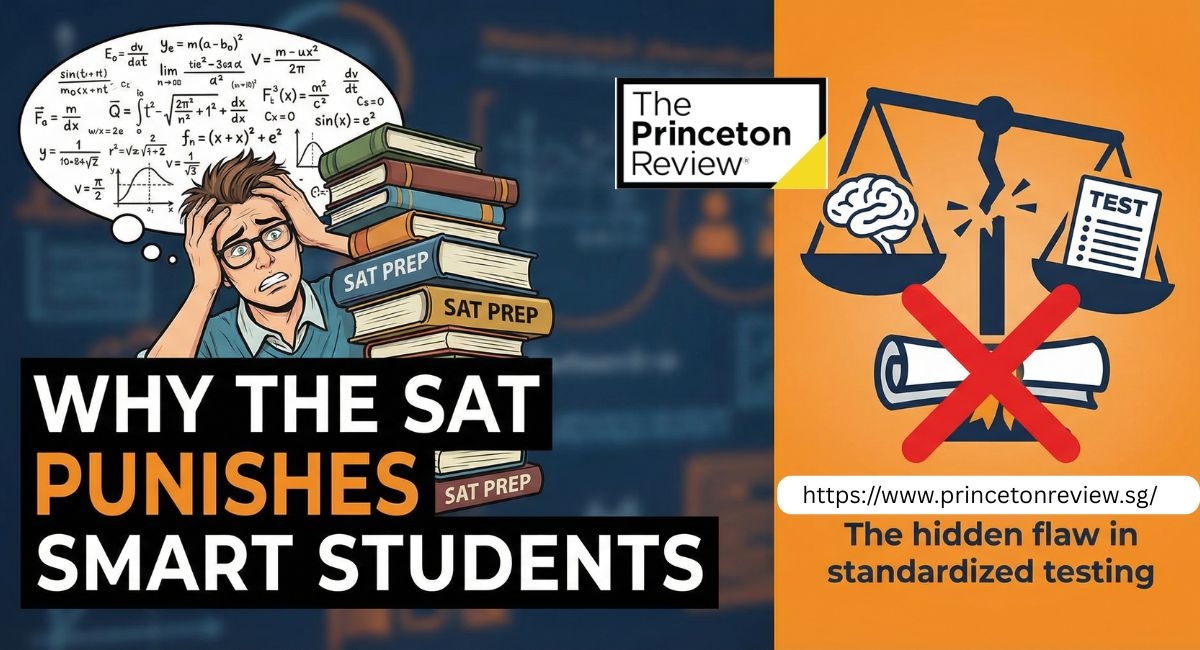
The SAT is often touted as an impartial, standard way of measuring academic ability. While in theory this test should reward intelligence, reasoning ability and preparation, its application often does the opposite and leaves many truly intelligent students frustrated, underscored and perplexed about why their abilities did not translate to points.. This isn’t accidental. The structure of the SAT test systematically penalizes certain kinds of intelligence while favoring others that are easier to standardize and monetize.
Understanding why the SAT punishes smart students requires looking beyond the myth of “objective testing” and into how the exam is actually designed, timed, and scored.
Intelligence vs. Test Compliance
Smart students tend to question assumptions, explore alternatives, and think deeply about problems. The SAT test doesn’t reward that. It rewards speed, pattern recognition, and strict compliance with test logic—even when that logic is artificial.
For example, in reading sections, a thoughtful student may consider nuance, tone, or author intent beyond what’s explicitly stated. The SAT often punishes this by marking nuanced interpretations wrong if they don’t match the test writer’s preferred answer. The exam doesn’t ask, “What makes the most sense?” It asks, “What answer fits our rubric best?”
That’s not intelligence. That’s obedience.
Time Pressure Hurts Deep Thinkers
The SAT exam is timed aggressively, which penalizes students who process information more deeply rather than quickly. Smart students often double-check reasoning, test edge cases, and mentally justify answers. That behavior is rational in real academics—and disastrous on the SAT test.
Here’s the uncomfortable truth:
Exams such as the SAT test often focus less on knowledge than on how fast candidates recognize familiar question structures and respond quickly, thus explaining why those trained through intensive SAT prep often outscore equally intelligent peers who rely solely on raw ability alone.
The Advantage of Test-Specific Training
Ultimately, this flaw highlights one of the SAT's key weaknesses: It rewards preparation style over intellectual depth. Students attending structured SAT classes learn shortcuts, elimination tactics and repetitive patterns which inflate scores without necessarily improving real academic skills.
Tutors like The Princeton Review Singapore openly acknowledge this reality by focusing their programs on test strategy, not just subject mastery. That alone should raise questions. If intelligence were enough, such specialized training wouldn’t be necessary.
How the SAT Actually Filters Students
The SAT functions less as an intelligence test and more as a filter for:
-
Students who can afford professional SAT test prep
-
Students who adapt quickly to artificial constraints
-
Students trained to suppress overthinking
Below is a simplified breakdown of how different student traits interact with the SAT test design:
|
Student Trait |
Real Academic Value |
SAT Outcome |
|
Deep analytical thinking |
Very high |
Often penalized |
|
Fast pattern recognition |
Moderate |
Highly rewarded |
|
Questioning assumptions |
High |
Penalized |
|
Test-taking strategies |
Low outside exams |
Strongly rewarded |
|
Conceptual mastery |
High |
Inconsistently rewarded |
This mismatch explains why many top students feel blindsided by their scores.
Standardization Creates Blind Spots
The SAT must be standardized to function at scale. That means ambiguity, creativity, and alternative reasoning paths are liabilities, not assets. Smart students often see multiple valid interpretations or approaches. The test allows only one.
This is especially visible in math questions where unconventional but correct reasoning leads to the right answer—but takes too long. The SAT doesn’t care how elegant your thinking is. It only cares whether you arrived fast enough.
Why This Isn’t an Accident
Let’s be clear: the SAT is not broken. It’s doing exactly what it was designed to do—rank students efficiently, not accurately. Speed and predictability are easier to score than intelligence.
The rise of SAT classes and private coaching didn’t fix the problem; it exposed it. When performance improves mainly through strategy training rather than learning, the test stops being a measure of intelligence and becomes a measure of coaching quality.
Can Smart Students Still Win?
Yes—but only if they adapt. Smart students who succeed on the SAT usually do so by unlearning instincts that serve them well elsewhere. They stop overthinking, memorize patterns, and treat the exam like a game.
That’s why targeted SAT test prep exists. Not because students lack intelligence, but because the test punishes those who assume intelligence alone is enough.
FAQs
1. Does the SAT really punish intelligent students?
Yes. The SAT penalizes deep thinking, alternative reasoning, and careful analysis in favor of speed and pattern familiarity.
2. Is the SAT an IQ test?
No.The SAT tests assess test-taking behaviors under timed pressure rather than raw intelligence or creativity.
3. Why do SAT prep courses work so effectively?
Simply put, SAT test preparation teaches students how the exam works rather than how to improve academically.
4. Are SAT classes necessary for higher scores?
In most cases, yes. A structured SAT course provides strategies which cannot be replaced through intelligence alone.
5. Can smart students improve their SAT scores?
Absolutely—but only by adapting to the test’s artificial rules and constraints rather than fighting them.
Final Takeaway
The SAT doesn’t fail smart students by accident—it filters them out by design. If you treat it as a pure measure of intelligence, you’ll lose. If you treat it as a strategic obstacle, you can beat it. The difference isn’t how smart you are. It’s how willing you are to play a flawed game on its own terms.
 Portuguese (Brazil)
 English
 Arabic
 French
 Spanish
 Portuguese
 Deutsch
 Turkish
 Dutch
Dutch
 Italiano
 Russian
 Romaian
 Greek
Greek
