


 Ban & Monetization Policy
 MyLiveRoom Rewards Program Rules & Eligibility
How to Convert a Slight Advantage in the Middle Game Without Overpushing
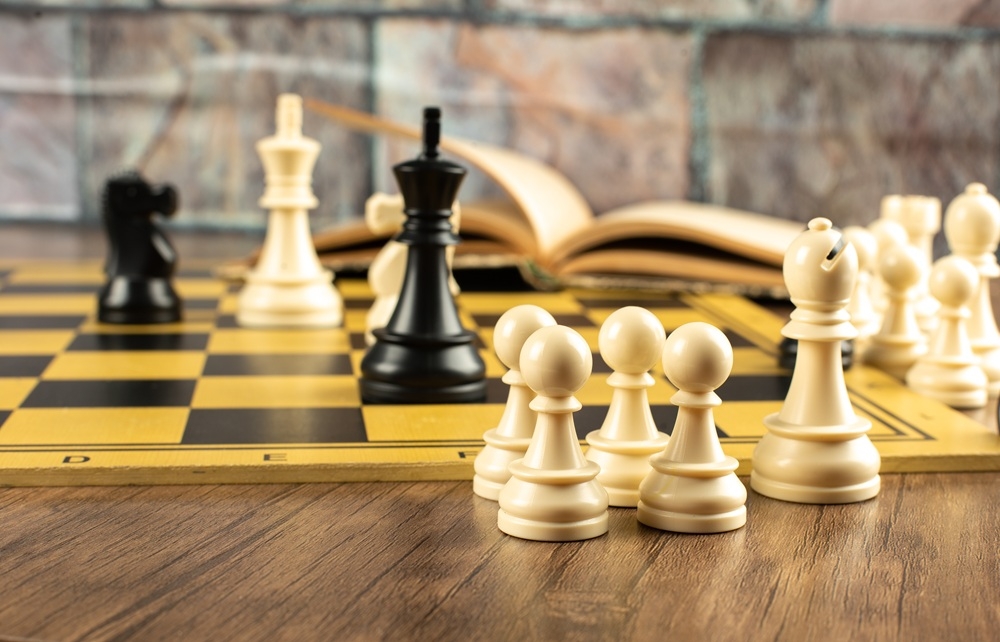
You know the feeling. The position looks better. Your pieces are active. Maybe you’ve got the bishop pair, maybe a healthier pawn structure. Engine says +0.8. Not winning. Just… better.
And then you push too hard.
That’s how most players throw away good positions. Not because they’re worse. But because they try to force a win that isn’t there yet.
I’ve seen this mistake from beginners, from 1700s, even from students who’ve taken serious grandmaster chess lessons and still rush the position. A slight advantage isn’t a green light to attack blindly. It’s a signal to squeeze. There’s a difference.
Let’s talk about how to actually convert those positions without self-destructing.
Understand What “Slight Advantage” Really Means
First thing. Slight advantage does not mean you’re winning.
It usually means one of these:
-
Better minor piece
-
Healthier pawn structure
-
Slight space advantage
-
More active rook
-
Safer king
That’s it. Not mate in five.
In tournament games, especially classical time control, most decisive results come from small advantages accumulated over time. Not flashy sacrifices. Not random pawn storms.
Look at high-level games. Even simple structures like the Caro-Kann yes, the kind you’d study in a caro kann course often lead to slow, strategic squeezing. White presses. Black defends. One inaccuracy, then it collapses.
The advantage grows. It’s not forced.
The Biggest Middle Game Mistake: Forcing the Issue
Here’s what usually happens.
Player sees slight edge.
Feels good.
Then launches attack without preparation.
Pawn storm. Premature sacrifice. Opening files that shouldn’t be opened.
And suddenly? Counterplay.
Overpushing happens because of ego. Or impatience. Or fear that the opponent will “equalize.”
Truth is, if your position is better, you don’t need to rush. Let them suffer.
At Metal Eagle Chess, we often show students games where nothing dramatic happens for 15 moves. Just pressure. Improving pieces. Restricting counterplay. That’s how advantages convert.
Quiet moves win games.
Step One: Improve the Worst Piece
This sounds basic. It is. But most players skip it.
Before attacking, ask:
Which of my pieces is doing the least?
Fix that first.
If your rook is passive, lift it.
If your knight has no squares, reposition.
If your king is unsafe, improve that.
Strong online chess teachers drill this idea constantly. Not because it’s fancy. But because it works.
You don’t need brilliance. You need coordination.
Step Two: Restrict Counterplay
If your opponent has zero active plans, you’re already halfway there.
In many middle game positions especially from solid openings studied in chess courses for beginners the battle is not about tactics. It’s about limiting activity.
Block pawn breaks.
Control open files.
Prevent piece exchanges that relieve pressure.
Small moves. Strong impact.
Sometimes the best move is simply stopping their idea.
Game Situation Example
Let’s say you’re playing a typical Caro-Kann structure. You’ve got space on the kingside. Black is cramped but solid.
Many players push g4-g5 immediately. Looks aggressive.
But what if Black’s only plan is …c5?
Instead of attacking, you play Re1. Then Bd3. Then h3. Slowly tightening the grip.
When …c5 finally comes, it’s too late. You’re ready.
That’s converting without overpushing.
Small improvements first. Break later.
Step Three: Create a Second Weakness
This is advanced. But essential.
One weakness can be defended.
Two weaknesses stretch the position.
If you’re pressing on the queenside, maybe shift attention to the kingside. If they’re tied down to a backward pawn, probe their king.
Even in positions where the engine says +0.5, creating multiple problems forces errors.
Grandmasters don’t “attack.” They multiply problems.
Psychological Control Matters
Tournament chess isn’t just calculation.
When you’re slightly better, your opponent feels it. They know.
If you stay calm, make improving moves, avoid cheap tricks, they start doubting themselves.
But if you rush? They get confidence.
Advanced students often struggle here. They see an advantage and think they must prove something. No. The board proves it over time.
Patience wins more games than tactics at club level.
Time Management in Slightly Better Positions
Here’s another mistake.
Players think being better means playing faster.
Wrong.
Use your time wisely. Especially before committing to pawn breaks or exchanges.
In rapid events, it’s tempting to speed up. Don’t. Even in 15+10 formats, take a breath before transforming the position.
Small advantages vanish quickly after one careless move.
Common Errors When Converting
Let’s be blunt.
Overextension of pawns.
Unnecessary sacrifices.
Trading your best piece.
Opening the position when you’re better in closed structures.
Ignoring opponent counterplay.
I’ve seen juniors do this. Adults too. Even hobbyists who’ve completed multiple chess courses for beginners and still struggle to slow down.
Improvement isn’t about learning more openings. It’s about decision discipline.
When Should You Finally Push?
There is a moment.
Usually when:
-
All pieces are optimized.
-
Opponent is tied down.
-
Counterplay is minimized.
-
You’ve calculated concrete lines.
Then you break.
Pawn push.
Exchange sacrifice.
Central breakthrough.
But it’s prepared. Not emotional.
Students studying structured systems including positional frameworks often discussed in grandmaster chess lessons learn timing over tactics. That’s the real edge.
FAQ: Converting Middle Game Advantages
Q1: I’m better but can’t find a winning plan. What should I do?
Improve your worst piece. Re-evaluate opponent counterplay. Don’t force complications unless calculation is clear.
Q2: Should I trade pieces when I’m slightly ahead?
Depends. If the endgame favors your structure or activity, yes. But don’t trade your best attacking piece just because exchanges feel “safe.”
Q3: How do beginners practice conversion skills?
Study annotated master games. Analyze equal positions that slowly shift. And avoid blitz-only training. Structured guidance from experienced online chess teachers helps here.
Q4: Is engine evaluation reliable in practical play?
Engines evaluate precisely. Humans don’t. Practical advantage matters more than numerical edge.
Training This Skill the Right Way
You don’t learn conversion from puzzles alone.
You learn it from:
Deep game analysis.
Understanding structures.
Playing longer time controls.
Getting feedback.
At Metal Eagle Chess, we focus heavily on middle game decision-making. Not just tactics. Not just opening prep. Because that’s where most club players lose half points.
Parents of junior players should especially note this. Young talents often attack too soon. Guiding them through structured learning whether via serious programs or well-designed chess courses for beginners builds patience early.
And patience becomes rating.
Conclusion
A slight advantage is fragile. It’s not a trophy. It’s a responsibility.
Don’t rush it.
Don’t decorate it with unnecessary fireworks.
Don’t try to win in one move.
Improve pieces. Restrict counterplay. Create a second weakness. Break at the right time.
That’s how you convert without overpushing.
Chess isn’t about forcing brilliance. It’s about earning it, move by move.
And once you truly understand that, those +0.8 positions stop slipping away.
 Greek
Greek
 English
 Arabic
 French
 Spanish
 Portuguese
 Deutsch
 Turkish
 Dutch
Dutch
 Italiano
 Russian
 Romaian
 Portuguese (Brazil)
