


 Ban & Monetization Policy
 MyLiveRoom Rewards Program Rules & Eligibility
Top Compensation Management Software for Enterprises in 2026
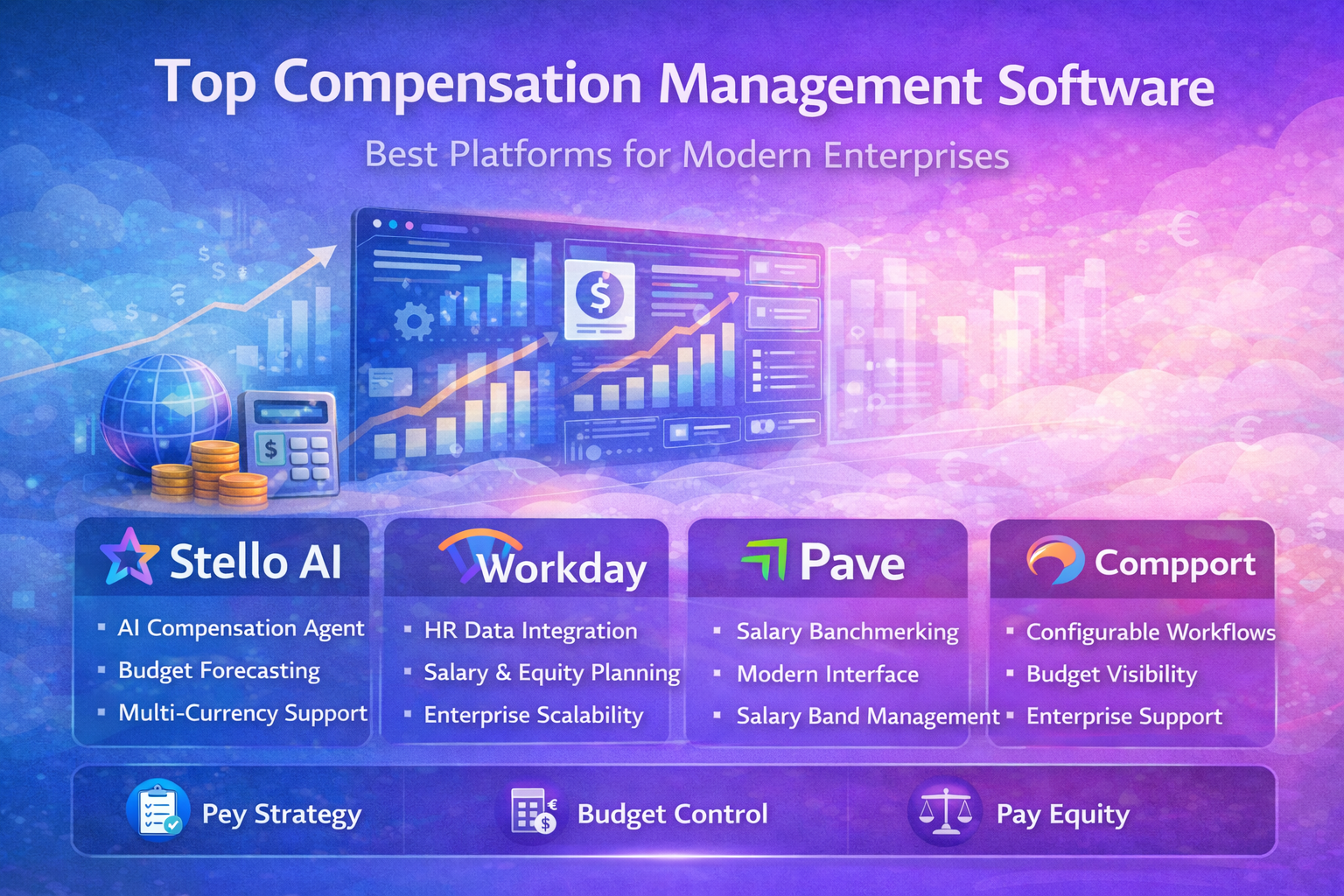
Compensation is one of the most financially sensitive and strategically important functions inside an organization. It affects retention, performance alignment, pay equity, and ultimately profitability. As companies scale, managing salary bands, merit cycles, bonuses, and budget controls manually becomes unsustainable.
That’s why enterprises are investing in the top compensation management software — platforms that bring structure, visibility, and financial discipline to compensation planning.
But not all systems are built the same. Some focus on workflow organization. Others emphasize predictive modeling and automation. The right choice depends on the complexity of your workforce and the maturity of your compensation strategy.
Here’s what defines leading compensation management software in 2026.
What Makes Compensation Software “Top Tier”?
Before reviewing platforms, it’s important to define what separates average tools from top compensation management software.
Enterprise-ready systems should provide:
-
Structured merit and bonus cycle management
-
Salary band and range enforcement
-
Department-level budget tracking
-
Multi-layer approval hierarchies
-
Real-time financial visibility
-
Pay equity monitoring
-
Integration with HRIS and payroll systems
-
Global, multi-currency support
Advanced platforms now add predictive modeling and AI-driven decision support.
The difference between good and great software lies in whether it simply organizes compensation workflows — or strengthens compensation decisions.
Leading Compensation Management Platforms
Below are several platforms frequently evaluated by enterprise HR and finance teams.
Stello AI
Stello AI is positioned as an AI-powered enterprise compensation solution.
Key strengths include:
-
AI Compensation Agent for merit optimization
-
Real-time payroll forecasting
-
Scenario modeling before approvals
-
Automated salary band enforcement
-
Strong HR–finance integration
Stello AI focuses on decision intelligence. Instead of only tracking merit increases, it analyzes compensation impact and flags potential risks before final approval.
Best suited for: Enterprises requiring predictive modeling, automation, and advanced financial alignment.
Workday Compensation
Workday offers compensation planning within its broader HR ecosystem.
Strengths include:
-
Deep integration with HRIS
-
Enterprise scalability
-
Strong reporting capabilities
-
Centralized workforce data
Best suited for: Organizations already operating within the Workday suite and seeking integrated compensation planning.
HRSoft
HRSoft focuses on structured compensation governance.
Strengths include:
-
Organized merit review workflows
-
Budget tracking visibility
-
Multi-level approval routing
-
Compliance-ready documentation
HRSoft emphasizes structured process control and centralized oversight.
Best suited for: Enterprises transitioning from spreadsheet-based planning to structured compensation cycles.
Compport
Compport provides configurable compensation workflows for global enterprises.
Strengths include:
-
Department-based budget allocation
-
Customizable approval hierarchies
-
Performance-linked compensation planning
Best suited for: Organizations seeking configurable governance with global capabilities.
Pave
Pave combines compensation benchmarking data with structured planning tools.
Strengths include:
-
Market-aligned salary benchmarking
-
Salary band management
-
Modern interface and reporting
Best suited for: Scaling companies balancing competitive pay with structured compensation planning.
Key Evaluation Criteria
When selecting top compensation management software, enterprises should consider:
Workforce Complexity
Global operations, multiple currencies, and layered bonus structures increase system requirements.
Financial Oversight Needs
Does finance require predictive payroll modeling or just post-cycle reporting?
Governance Requirements
Are audit trails and structured approvals critical?
Equity and Compliance
Does the organization operate under pay transparency regulations?
Integration Capabilities
How seamlessly does the system connect with existing HRIS and payroll tools?
The most expensive solution is not always the best. The best solution is the one aligned with organizational complexity.
Workflow vs Intelligent Compensation Systems
Compensation software typically falls into two categories:
-
Workflow-focused systems that organize and standardize merit cycles.
-
Intelligence-driven systems that analyze, forecast, and optimize compensation decisions.
As payroll costs rise and financial scrutiny increases, many enterprises are shifting toward platforms that integrate predictive modeling into enterprise compensation management.
Automation reduces administrative burden. Predictive modeling reduces financial risk.
The Future of Compensation Software
Compensation management is evolving rapidly.
Emerging trends include:
-
Real-time equity monitoring
-
Continuous compensation review cycles
-
Predictive payroll forecasting
-
AI-assisted merit recommendations
-
Stronger HR–finance collaboration
The definition of top compensation management software is shifting from workflow digitization toward strategic decision support.
Final Thoughts
Compensation shapes both culture and cost structure. Choosing the right software is not a technical decision — it’s a strategic one.
The top compensation management software solutions provide structure, transparency, and financial clarity. The most advanced platforms go further by adding intelligence and predictive modeling.
Enterprises that modernize their compensation systems gain tighter payroll control, improved equity oversight, and stronger executive visibility.
In a competitive talent market, structured compensation governance is no longer optional. It is a competitive advantage.
 Russian
 English
 Arabic
 French
 Spanish
 Portuguese
 Deutsch
 Turkish
 Dutch
Dutch
 Italiano
 Romaian
 Portuguese (Brazil)
 Greek
Greek
