


 Ban & Monetization Policy
 MyLiveRoom Rewards Program Rules & Eligibility
Fresh Breath, Healthy Pet: Dental Care Essentials for Murrieta Dogs and Cats
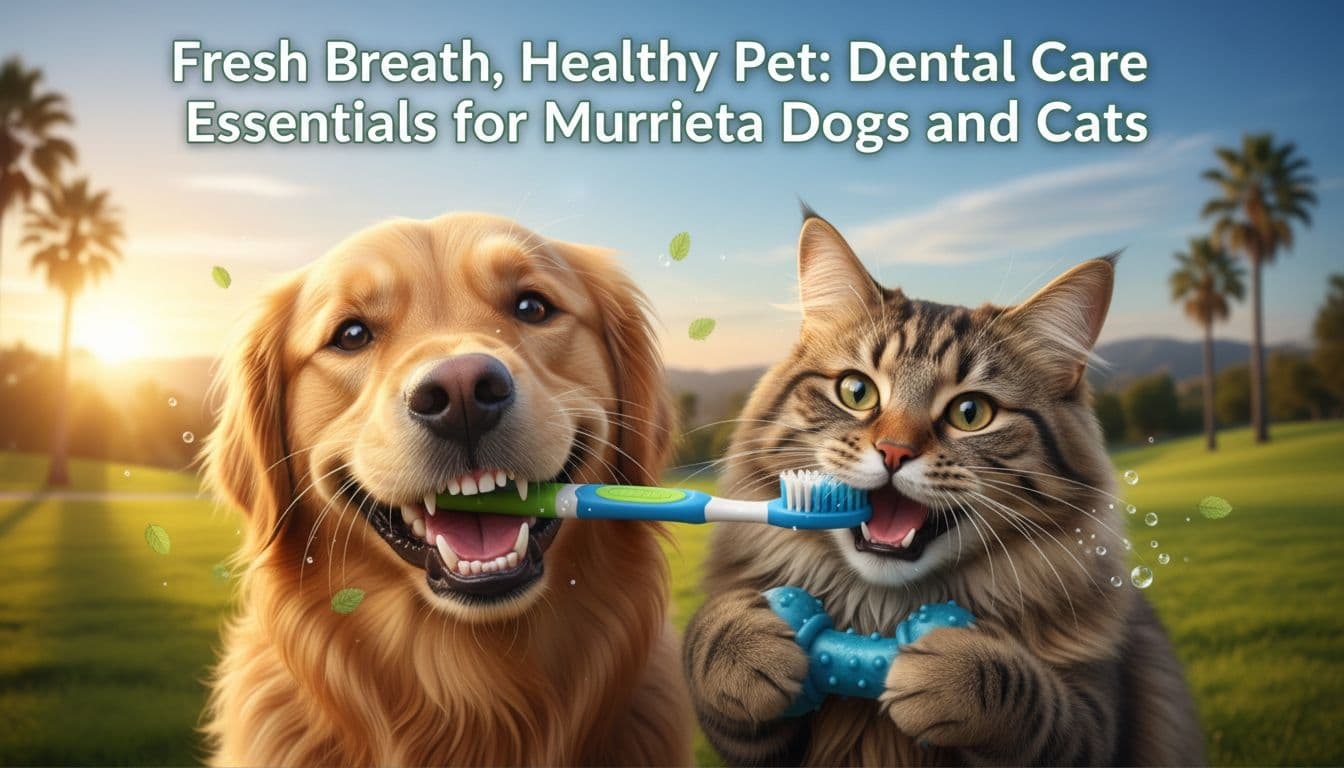
Bad breath is not just “dog breath” or “cat breath.” In many cases, it is a sign of dental disease. The tricky part is that dental disease often hides in plain sight. Your pet may still eat, play, and act normal while infection builds under the gumline.
Here is a stat that surprises many Murrieta pet owners: about 80% of pets show signs of dental disease by age 3. That does not mean 80% need major dental surgery by age 3. It means plaque and tartar start early, and gum inflammation is common. If you wait until you see obvious pain, your pet may have been uncomfortable for a long time.
This guide makes dental care simple. You will learn what causes dental disease, why Murrieta lifestyle factors matter, what you can do at home, and what a professional dental cleaning at the hospital includes. You will also get a practical plan for how often cleanings may be needed based on breed, age, and risk.
Why dental disease matters (more than breath)
Dental disease starts with plaque, a sticky film of bacteria. Plaque hardens into tartar (calculus). Tartar irritates the gums and leads to gingivitis. Over time, infection can damage the tissues that hold teeth in place.
Dental disease can cause:
-
bad breath that keeps getting worse
-
red, swollen, or bleeding gums
-
loose teeth or missing teeth
-
drooling or pawing at the mouth
-
chewing on one side
-
dropping food or eating slower
-
irritability, hiding, or less interest in play
It can also lead to painful abscesses and chronic infection. Many pets still eat even when their mouth hurts. Animals have strong survival instincts. So appetite alone is not a reliable sign that your pet is comfortable.
Making the “80% by age 3” stat relatable
Think about how fast plaque builds on human teeth. If you skip brushing for a week, you feel it. Pets often go months or years without any real tooth brushing. Many pets also have crowded teeth, especially small dogs. Crowding traps food and bacteria.
Now add this: most dental disease sits below the gumline, where you cannot see it well. A tooth can look “fine” on the surface while the root area has infection. That is why pets can have advanced dental disease without obvious signs until it becomes severe.
The good news is that small habits at home, plus timely professional cleanings, can prevent a lot of pain.
Murrieta lifestyle factors that can affect pet teeth
Every region has small factors that can change how quickly tartar builds or how dirty a pet’s mouth gets. Murrieta pets often deal with a few common ones.
Hard water mineral buildup
Many Southern California households have hard water. Hard water contains more minerals. Minerals can contribute to buildup on surfaces over time. It is not the only cause of tartar, but it can be one piece of why some pets in the area build calculus quickly.
If your pet’s water bowl shows white residue, your pet may be getting more mineral exposure too. You do not need to panic. Just know that your pet might need stronger prevention and more consistent cleanings.
Outdoor debris exposure
Murrieta dogs often hike, explore trails, and spend time in yards. Outdoor play increases contact with:
-
dust and grit
-
plant debris
-
sticks and foxtails (seasonal)
-
unknown items picked up and chewed
Chewing random objects can chip teeth or irritate gums. Dirt and debris also add more “mouth mess” that can feed bacteria. Cats that roam outdoors can also get mouth injuries from fights.
Busy social life (boarding, daycare, dog parks)
A social dog may chew more toys, pick up more germs, and experience more stress. Stress can worsen inflammation in some pets. This does not mean dog parks cause dental disease, but lifestyle affects overall health and habits.
Dental disease is not one problem. It is a few problems.
Most Pet dental Care visits involve one or more of these issues:
Plaque and tartar
This is the visible yellow or brown buildup on teeth.
Gingivitis
This is gum inflammation. Gums may look red, swollen, or bleed easily.
Periodontal disease
This is deeper infection that damages the ligament and bone supporting the teeth. This is a leading cause of tooth loss.
Tooth fractures
Dogs can break teeth on hard chews, bones, antlers, rocks, and even kennel bars. Broken teeth can be painful and often need treatment.
Resorptive lesions (cats)
Many cats develop painful tooth resorption. These can be hard to spot without a full exam and dental X-rays.
Your at-home dental care toolkit (simple and realistic)
Home care does not have to be perfect. It has to be consistent. Even a few minutes a week helps. The goal is to reduce plaque before it hardens into tartar.
1) Tooth brushing (best tool)
Brushing is the gold standard because it removes plaque at the gumline.
What to use:
-
a soft pet toothbrush or finger brush
-
enzymatic pet toothpaste (never human toothpaste)
How to start (no stress approach):
-
Let your pet lick toothpaste off your finger for a few days.
-
Touch the lips and gums gently, then reward.
-
Add a finger brush and rub the outer surfaces of teeth.
-
Move up to a small toothbrush when your pet is ready.
Aim for the outside surfaces of the upper back teeth. That area collects tartar fast.
Schedule: daily is ideal, but 3 to 4 times per week still helps a lot.
2) Finger brushes and gauze wraps
Some pets hate a brush. A finger brush can feel less scary. You can also wrap gauze around your finger and rub along the gumline.
This is a good option for:
-
small dogs
-
cats that tolerate handling
-
senior pets with sensitive mouths
3) Enzymatic toothpaste
Enzymatic toothpaste helps break down plaque and supports healthier oral bacteria. It also tastes like poultry or seafood, which makes brushing easier.
Use pet-safe toothpaste only. Human toothpaste can upset the stomach and may contain ingredients that are not safe for pets.
4) Dental chews (look for the VOHC seal)
Dental chews can help reduce plaque and tartar. Choose products with the VOHC seal (Veterinary Oral Health Council). This seal means the product has evidence it helps reduce plaque or tartar.
Chews work best as a support tool, not a replacement for brushing.
Safety tips:
-
Choose the right size for your pet.
-
Supervise chewing.
-
Avoid very hard items that can break teeth (bones, antlers, hooves, rocks).
-
If your dog tries to swallow large chunks, skip chews and ask your vet for safer options.
5) Dental diets and water additives (ask your vet)
Some prescription dental diets have a kibble design that helps reduce plaque. Water additives can also help some pets. Results vary, so it is best to ask your veterinarian what fits your pet’s needs.
6) Quick weekly mouth checks
Once a week, take 30 seconds to look for:
-
red gumline
-
tartar on back teeth
-
broken or worn teeth
-
swelling under the eye (can signal tooth root problems)
-
drooling or pawing at the mouth
If you see pain signs, do not start aggressive brushing. Call your vet.
What happens during an in-hospital dental cleaning
A professional dental cleaning does more than scrape tartar off visible tooth surfaces. Real dental care includes checking below the gumline and looking at the roots.
Here is what a thorough dental visit often includes:
1) Exam and treatment plan
Your veterinarian checks the mouth and discusses the plan. Some pets need a cleaning only. Others may need extractions or treatment of infected teeth.
2) Pre-anesthetic bloodwork
Pre-anesthetic bloodwork helps your veterinarian evaluate organ function and overall health before anesthesia. It can catch issues that may affect anesthesia safety or recovery.
This is especially important for:
-
senior pets
-
pets with chronic conditions
-
pets on long-term medications
3) Anesthesia and monitoring
Dental cleanings require anesthesia because pets will not hold still for a deep cleaning and X-rays. Anesthesia allows:
-
a safe and thorough cleaning
-
less stress and fear for your pet
-
better pain control
The team monitors vital signs throughout the procedure.
4) Digital dental X-rays (a key step)
Dental X-rays matter because many painful problems are hidden. X-rays can reveal:
-
tooth root infections
-
bone loss from periodontal disease
-
resorptive lesions in cats
-
fractured roots
-
retained baby teeth
Without X-rays, dental disease can be missed.
5) Scaling and cleaning (above and below the gumline)
The team removes plaque and tartar from the tooth surfaces and under the gumline where infection starts.
6) Polishing
Polishing smooths the tooth surface. This helps slow down new plaque sticking to rough areas.
7) Treatment as needed (including extractions)
If a tooth is badly infected, loose, or painful, extraction can be the kindest option. Removing a painful tooth often improves quality of life fast. Many pets act younger after dental treatment because chronic mouth pain is gone.
8) Post-procedure pain control and home instructions
Your pet goes home with a plan. That may include:
-
pain medications
-
soft food for a short time
-
activity limits
-
follow-up guidance
How often should cleanings be scheduled?
There is no single schedule that fits every pet. Some pets build tartar fast. Others do not. Breed, age, and genetics play a big role.
Here is a practical guide:
High-risk pets (often need cleanings more often)
-
small breed dogs (crowded teeth)
-
brachycephalic breeds (short noses, crowded mouths)
-
pets with past periodontal disease
-
pets that do not tolerate brushing at home
-
older pets with gum recession
These pets may need professional dental care about every 6 to 12 months, depending on findings.
Moderate-risk pets
-
medium to large dogs with decent home care
-
indoor cats with mild buildup
These pets may do well with cleanings about every 12 to 24 months, based on exams.
Lower-risk pets
-
pets with excellent home brushing habits
-
pets with low tartar buildup on exams
Some may go longer, but they still need oral checks at wellness visits.
The best schedule comes from your pet’s mouth, not the calendar. Your veterinarian can estimate timing after an exam and adjust based on what they see each year.
A simple maintenance plan you can actually follow
If you want a doable plan, try this:
-
Daily or 3 times per week: brush teeth (even 30 seconds helps)
-
Daily: dental chew with VOHC seal (if safe for your pet)
-
Weekly: quick mouth check
-
Every wellness visit: ask for an oral exam and dental score
-
When recommended: schedule a professional cleaning before disease becomes severe
Consistency beats intensity. A small routine done often works better than a big effort once a month.
Give your pet the gift of health (and fresher breath)
Dental care is about comfort and health, not cosmetics. Fresh breath is a bonus. The real win is less pain, fewer infections, and a happier pet.
Give your pet the gift of health with our Pet Dental Care services.
Start your pet's journey to better health at the best Animal Hospital in Murrieta.
 Portuguese (Brazil)
 English
 Arabic
 French
 Spanish
 Portuguese
 Deutsch
 Turkish
 Dutch
Dutch
 Italiano
 Russian
 Romaian
 Greek
Greek
