


 Ban & Monetization Policy
 MyLiveRoom Rewards Program Rules & Eligibility
The Complete Guide to Anesthesia Coding and Billing in Texas: Accuracy, Compliance & Faster Reimbursements
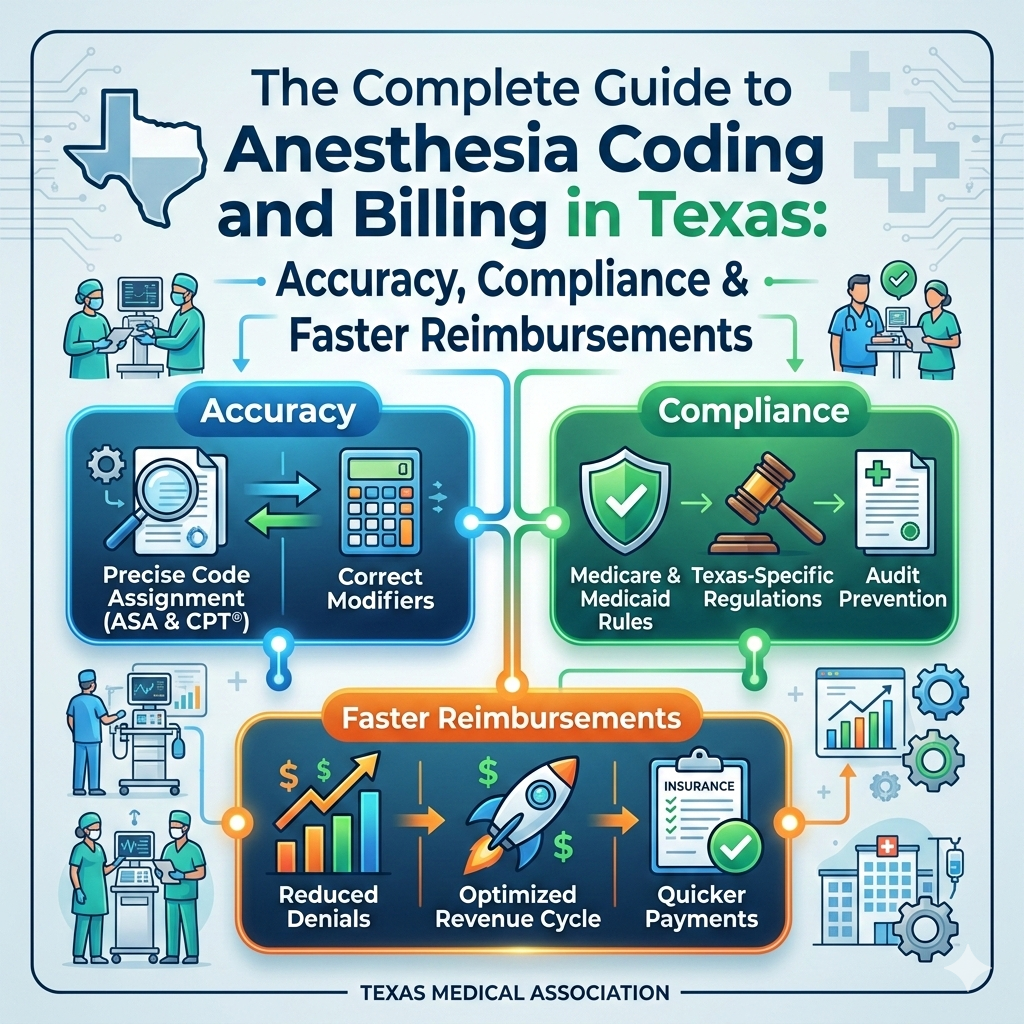
Healthcare reimbursement is becoming more complex every year—especially in specialties where precision directly impacts revenue. Among them, anesthesia stands out as one of the most detail-oriented and compliance-driven fields in medical billing.
For providers across Texas, anesthesia coding and billing is not just about submitting claims. It involves time-based calculations, modifier accuracy, payer-specific rules, and strict documentation standards. Even a small error can delay reimbursement or trigger costly denials.
In this guide, we’ll explore how anesthesia billing works in Texas, common challenges providers face, compliance essentials, and how partnering with an experienced team like 247 Medical Billing Services can help streamline the process and protect revenue integrity.
Understanding the Fundamentals of Anesthesia Coding and Billing
Anesthesia billing differs significantly from traditional evaluation and management (E/M) services. Unlike flat-fee CPT services, anesthesia reimbursement is calculated using a unique formula:
Total Reimbursement = (Base Units + Time Units + Modifying Units) × Conversion Factor
Let’s break this down.
1. Base Units
Every anesthesia CPT code is assigned a base unit value that reflects the complexity of the procedure. These values are determined by the American Society of Anesthesiologists (ASA) Relative Value Guide.
2. Time Units
Anesthesia is time-based. Time begins when the anesthesiologist starts preparing the patient and ends when care is transferred. Proper documentation of start and stop times is critical.
3. Modifying Units
Certain conditions increase reimbursement:
-
Physical status modifiers (P1–P6)
-
Emergency conditions
-
Qualifying circumstances such as extreme age or hypothermia
4. Conversion Factor
Each payer—including Medicare and private insurers in Texas—assigns a conversion factor that determines the dollar amount per unit.
Precision in each component directly impacts payment accuracy.
Why Anesthesia Billing in Texas Requires Special Attention
Texas has a diverse healthcare ecosystem—ranging from independent ambulatory surgery centers to major hospital systems. Each payer has its own set of guidelines.
Common Challenges in Texas
-
Varying Medicaid and Medicare reimbursement structures
-
Commercial payer-specific modifier rules
-
Frequent claim denials due to time discrepancies
-
Audit risks tied to documentation errors
-
Complex supervision and medical direction rules
For example, documentation must clearly support whether the service was:
-
Personally performed
-
Medically directed
-
Medically supervised
-
CRNA-only services
Even minor coding misinterpretations can affect compliance and reimbursement.
Key Components of Accurate Anesthesia Coding
Proper CPT Code Selection
Anesthesia CPT codes typically fall within the 00100–01999 range. The correct code must reflect:
-
Surgical procedure type
-
Anatomical location
-
Risk complexity
Using a surgical CPT instead of an anesthesia CPT is a common error and leads to immediate rejection.
Modifier Accuracy
Modifiers are critical in anesthesia billing. Some frequently used modifiers include:
-
AA – Anesthesia services personally performed by anesthesiologist
-
QK – Medical direction of 2–4 concurrent anesthesia procedures
-
QX – CRNA service with medical direction
-
QZ – CRNA service without medical direction
Incorrect modifier pairing can drastically reduce reimbursement or trigger audits.
Time Documentation Compliance
Payers expect:
-
Exact start and stop times
-
Continuous documentation
-
No rounding errors beyond payer guidelines
Time must reflect continuous anesthesia care—not operating room time.
The Impact of Documentation on Revenue
Anesthesia billing is documentation-driven. Missing or vague documentation can result in:
-
Downcoding
-
Partial payment
-
Denials
-
Post-payment audits
Accurate records must include:
-
Pre-anesthesia evaluation
-
Intraoperative notes
-
Post-anesthesia care documentation
-
Medical necessity indicators
-
ASA physical status classification
Strong documentation not only ensures payment but protects providers during payer audits.
Texas-Specific Considerations in Anesthesia Billing
Medicare in Texas
Medicare assigns a state-specific conversion factor. Providers must verify updates annually to ensure correct calculations.
Texas Medicaid
Texas Medicaid may have unique supervision and documentation requirements. CRNA billing rules can vary depending on facility type and provider structure.
Commercial Payers
Private insurers often implement:
-
Pre-authorization rules
-
Modifier-specific policies
-
Bundling edits
Keeping track of multiple payer policies manually can overwhelm in-house billing teams.
Revenue Cycle Risks in Anesthesia Practices
Without specialized billing expertise, anesthesia practices may face:
-
High denial rates
-
Underpayments due to incorrect unit calculations
-
Delayed reimbursements
-
Increased audit exposure
-
Administrative overload
These challenges directly affect cash flow and operational stability.
How Specialized Anesthesia Billing Improves Financial Outcomes
Partnering with experienced billing professionals who understand anesthesia coding in Texas can significantly improve:
Claim Accuracy
Detailed pre-submission review reduces preventable denials.
Faster Payments
Clean claims lead to quicker adjudication.
Compliance Assurance
Regular internal audits help avoid penalties.
Transparent Reporting
Data-driven insights provide visibility into payer performance and revenue trends.
Why 247 Medical Billing Services Supports Texas Anesthesia Providers
When anesthesia providers partner with 247 Medical Billing Services, they gain access to a team trained specifically in anesthesia revenue cycle management.
Their approach focuses on:
-
Comprehensive charge capture
-
Accurate base and time unit calculations
-
Modifier validation
-
Payer-specific compliance checks
-
Proactive denial management
-
Detailed financial reporting
By aligning billing strategy with Texas payer regulations, practices can reduce revenue leakage and improve collections without increasing administrative burden.
The Role of Technology in Modern Anesthesia Billing
Today’s successful billing strategies combine expertise with advanced technology.
Key tools include:
-
Automated claim scrubbing
-
Real-time eligibility verification
-
Electronic remittance analysis
-
Denial tracking dashboards
-
Secure cloud-based documentation review
Technology alone isn’t enough—but when combined with specialty-specific knowledge, it becomes a powerful asset.
Avoiding Common Anesthesia Billing Mistakes
Here are frequent errors that Texas anesthesia practices should watch for:
-
Inconsistent time documentation
-
Incorrect use of physical status modifiers
-
Billing surgical CPT instead of anesthesia CPT
-
Failure to document medical direction properly
-
Missing post-anesthesia notes
-
Ignoring payer-specific conversion factor updates
Proactive auditing and staff education help prevent these issues.
The Financial Benefits of Optimized Anesthesia Billing
When billing processes are properly structured, practices may experience:
-
Reduced accounts receivable days
-
Lower denial percentages
-
Improved net collection rates
-
Increased first-pass claim acceptance
-
More predictable revenue streams
Over time, these improvements strengthen overall practice stability.
Compliance and Audit Preparedness
Anesthesia services are frequently audited due to time-based billing and supervision rules. Maintaining audit-ready documentation is essential.
Best practices include:
-
Conducting periodic internal reviews
-
Verifying concurrent case documentation
-
Ensuring medical necessity justification
-
Monitoring payer policy updates
-
Keeping clear communication between clinical and billing teams
A proactive compliance strategy protects both revenue and reputation.
Building a Sustainable Revenue Cycle Strategy
For anesthesia providers in Texas, sustainable growth depends on:
-
Accurate coding processes
-
Clear internal documentation workflows
-
Ongoing payer communication
-
Timely denial follow-ups
-
Regular financial performance analysis
Outsourcing to a specialized billing partner allows clinicians to focus on patient care while maintaining revenue accuracy behind the scenes.
The Future of Anesthesia Billing in Texas
Healthcare regulations continue to evolve. Value-based care models, payer audits, and documentation expectations are becoming more stringent.
Practices that adapt early—by strengthening coding accuracy, improving documentation clarity, and leveraging specialized expertise—will remain financially resilient.
Anesthesia billing is not simply an administrative task. It is a strategic component of practice management.
Conclusion: Precision Today, Stability Tomorrow
Anesthesia coding and billing in Texas requires detailed knowledge, continuous compliance monitoring, and careful financial oversight. The combination of time-based calculations, modifier accuracy, and payer-specific policies makes this specialty uniquely complex.
When handled correctly, it supports consistent cash flow and long-term practice growth. When managed poorly, it leads to denials, audits, and revenue loss.
By investing in structured billing processes—or partnering with experienced professionals like 247 Medical Billing Services—anesthesia providers can ensure accurate claims, faster reimbursements, and stronger financial performance.
 Greek
Greek
 English
 Arabic
 French
 Spanish
 Portuguese
 Deutsch
 Turkish
 Dutch
Dutch
 Italiano
 Russian
 Romaian
 Portuguese (Brazil)
