


 Ban & Monetization Policy
 MyLiveRoom Rewards Program Rules & Eligibility
Understanding Udyog Aadhaar: A Gateway for India’s Small Businesses
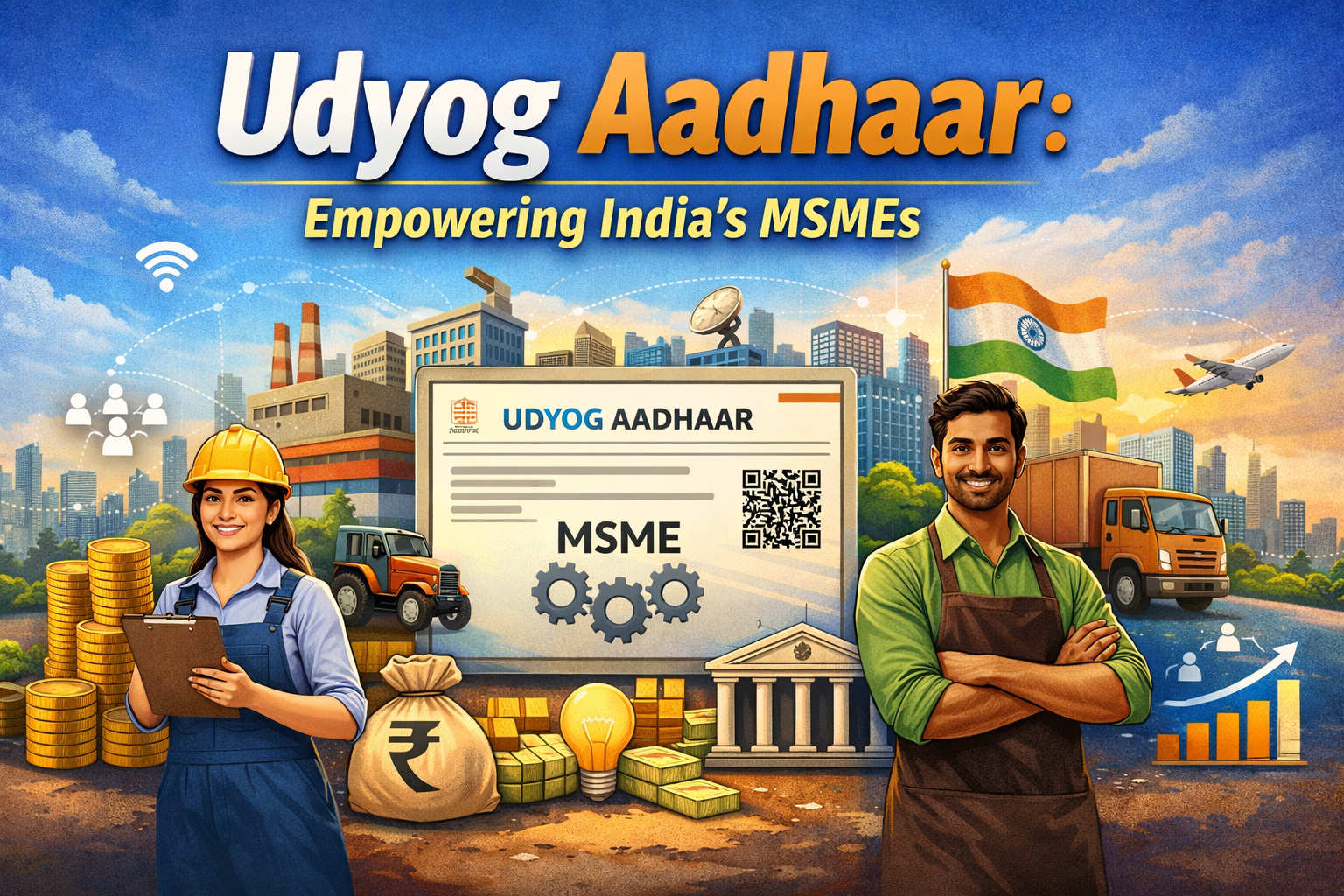
India’s economic engine is powered not only by large corporations but by millions of micro, small, and medium enterprises (MSMEs). To simplify business registration and enable easier access to government benefits, the Udyog Aadhar system was introduced as a streamlined identification mechanism for small businesses.
Whether you're an entrepreneur, freelancer, or small manufacturer, understanding Udyog Aadhaar can help you unlock significant advantages.
What Is Udyog Aadhaar?
Udyog Aadhaar was a government registration system designed specifically for MSMEs. It provided businesses with a unique identification number, enabling them to formally exist within India’s regulatory and financial ecosystem without facing heavy bureaucratic hurdles.
The initiative was launched by the Government of India to reduce red tape and encourage entrepreneurship, particularly among small-scale enterprises.
Why Was Udyog Aadhaar Introduced?
Before its introduction, registering a small business often required extensive paperwork, multiple approvals, and long waiting periods. Udyog Aadhaar aimed to solve several challenges:
-
Eliminate complex registration processes
-
Promote ease of doing business
-
Improve access to credit and subsidies
-
Create a unified MSME database
The program was administered by the Ministry of Micro, Small and Medium Enterprises, reflecting a broader policy shift toward digitization and simplification.
Key Benefits for Businesses
Registering under Udyog Aadhaar offered multiple practical advantages:
1. Simplified Registration
Entrepreneurs could complete registration online with minimal documentation, reducing compliance friction.
2. Access to Government Schemes
Registered businesses became eligible for numerous MSME-specific programs, including:
-
Credit guarantee schemes
-
Subsidies on patents and barcodes
-
Financial support for technology upgrades
3. Easier Bank Loans
Financial institutions often view registered MSMEs as lower-risk borrowers, which can improve loan approval chances.
4. Protection Against Delayed Payments
Certain MSME protections help businesses recover dues from buyers more efficiently.
Who Could Apply?
Udyog Aadhaar primarily targeted:
-
Micro enterprises
-
Small enterprises
-
Medium enterprises
This included manufacturers, service providers, traders, startups, and even individual proprietors.
The Transition to Udyam Registration
It is important to note that Udyog Aadhaar has since been replaced by Udyam Registration, which further refines MSME classification and compliance structures. However, the core objective remains the same: simplifying business formalization and improving institutional access.
Businesses previously registered under Udyog Aadhaar are encouraged to migrate to the newer system.
Why This Matters for Entrepreneurs
Formal registration is more than a bureaucratic checkbox — it directly affects a business’s growth potential. Recognition within the national framework can influence financing, partnerships, and legal protections.
For small businesses operating in competitive markets, these advantages can be decisive.
Final Thoughts
Udyog Aadhaar represented a pivotal step in India’s MSME policy evolution. By lowering entry barriers and promoting digital registration, it helped many small enterprises integrate into the formal economy.
For entrepreneurs navigating India’s business landscape, understanding such regulatory frameworks is not optional — it is strategic.
If you’re running a small business, staying updated with MSME registration mechanisms can directly impact your scalability and sustainability.
 English
 Arabic
 French
 Spanish
 Portuguese
 Deutsch
 Turkish
 Dutch
Dutch
 Italiano
 Russian
 Romaian
 Portuguese (Brazil)
 Greek
Greek
