


 Ban & Monetization Policy
 MyLiveRoom Rewards Program Rules & Eligibility
2026's Best Flexible Conduit Accessories: Tough & Adaptable
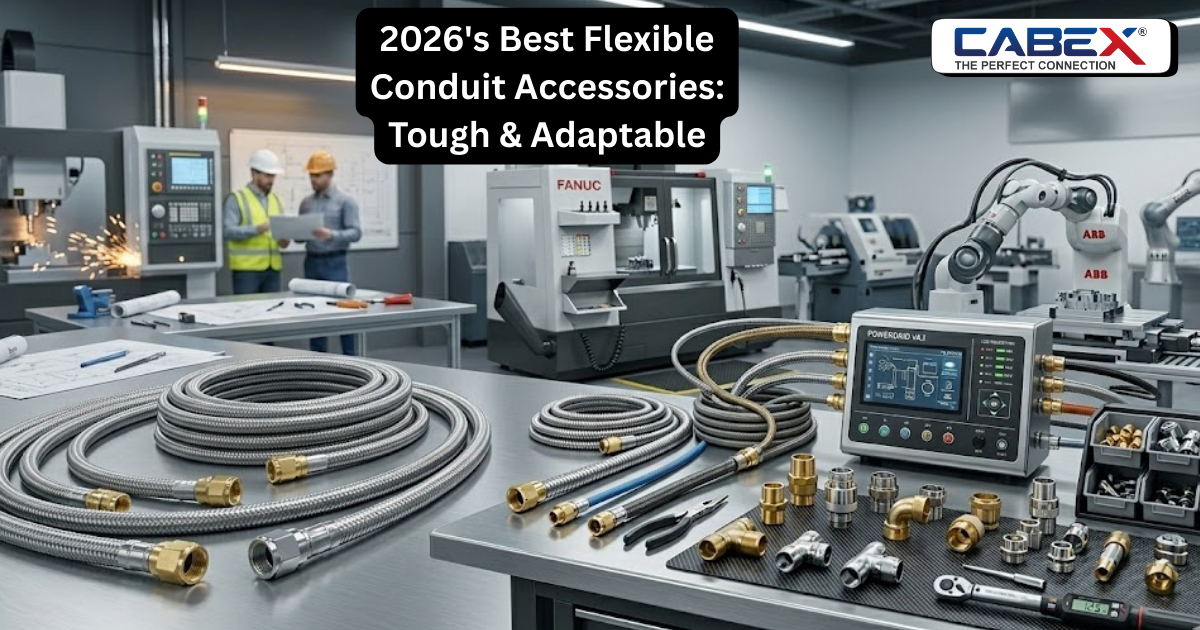
Flexible Conduit Accessories have evolved into essential components for modern electrical installations, offering unmatched toughness against vibration, corrosion, and environmental extremes while providing adaptability across diverse applications. In 2026, with rising demands from EV infrastructure, smart factories, and renewable energy projects, these accessories ensure reliable wiring protection and code compliance.
This comprehensive guide explores the top performers, backed by industry standards like UL 514B and NEC requirements, highlighting why they stand out for durability and versatility today.
Core Categories of Flexible Conduit Accessories
Flexible conduit accessories secure, seal, and support conduit runs, transforming basic tubing into robust systems. They include connectors, couplings, bushings, clamps, glands, and adapters, each engineered for specific challenges like tight bends or harsh exposures.
Connectors terminate conduit into boxes or panels, available in straight, 90-degree, or liquid-tight designs to handle moisture and strain. Couplings link conduit sections seamlessly, while bushings protect wires from sharp edges at terminations.
Clamps and straps provide mounting support, glands ensure sealing around cables, and adapters enable transitions between conduit types. In 2026, quick-install, tool-less options dominate for faster assembly in high-volume projects.
Table 1: Primary Accessory Types and Functions
Matching Accessories to Conduit Types
Flexible conduits vary by construction—metallic for strength, non-metallic for corrosion resistance—demanding compatible accessories to preserve performance. Flexible Metallic Conduit (FMC) uses metal fittings for grounding, while Liquidtight Flexible Metal Conduit (LFMC) pairs with sealed connectors for wet areas.
Liquidtight Flexible Non-Metallic Conduit (LNFC) favors PVC or nylon accessories for chemical resistance, ideal in HVAC or marine settings. Electrical Non-Metallic Tubing (ENT) relies on plastic straps and couplings for residential concealed runs. Specialty types like halogen-free or EMI-shielding conduits use matching low-smoke fittings.
Top 2026 accessories adapt across these, with universal threading (NPT/PG) and multi-size compatibility reducing inventory needs.
Table 2: Conduit Types and Recommended Accessories
Materials Driving Toughness in 2026
Material choice defines longevity. Galvanized steel offers economical strength for general use, resisting rust in mild conditions. Stainless steel (304/316 grades) excels in corrosive spots like food plants or offshore, with smooth finishes for hygiene.
Brass provides EMC shielding and precise threads for glands. Non-metallics like PVC withstand chemicals affordably, while nylon/polyamide handles abrasion in dynamic setups. Elastomers in seals dampen vibration, and UV-stabilized plastics endure solar exposure. Halogen-free options meet fire codes in tunnels and transit.
2026 innovations include hybrid composites blending metal core with polymer jackets for 20+ year lifespans.
Table 3: Material Properties Comparison
Performance Metrics for Adaptability
Toughness means surviving pull-out forces >500 lbs, impacts per IK10, and flex cycles exceeding 1 million. Adaptability shines in IP68/NEMA 6P seals for submersion, -60°C to +200°C ranges, and chemical resistance to oils/acids per UL standards.
EMC fittings with 360° shielding protect sensitive controls from VFD noise. Fire ratings like plenum-compliant low-smoke zero-halogen (LSZH) ensure safety in buildings. Salt-spray tests (1000+ hours) validate marine use. Datasheets now list these for quick spec matching.
Emerging 2026 Trends and Standards
Tool-less push-fit connectors cut install time by 50%, vital amid labor shortages. BIM-integrated models aid digital planning for data centers. Sustainability pushes recycled-content accessories meeting REACH/RoHS.
NEC 2023/2026 updates emphasize support spacing (every 4.5 ft for LFMC) and grounding clamps. Global harmonization favors PG/Metric threads. EV chargers demand IP69K fittings for high-pressure washdowns.
Table 4: Key Ratings and Compliance Checks
Installation Best Practices
Start with conduit measurement, leaving 6-12 inches slack for vibration. Secure within 12 inches of fittings per NEC, using two-hole straps for heavy runs. Torque connectors to spec (e.g., 20-30 in-lbs) for seals.
For LFMC, align jacket over connector body before tightening. Use lubricants on threads in cold installs. Test pulls and continuity post-install. Modular kits with pre-assembled ends speed retrofits.
Real-World Applications
Industrial Motors: LFMC with SS liquid-tight connectors withstands vibration/oil, adaptable to frame sizes via reducers.
Solar Farms: UV-resistant LNFC accessories with aluminum clamps handle thermal cycling, scaling from panels to inverters.
Data Centers: EMI glands on FMT whips shield servers, with adjustable straps for dense racks.
Food Plants: SS IP69K fittings enable daily washdowns without corrosion.
Sizing and Selection Guide
Trade sizes (3/8" to 4") match wire fill (40% max). Use reducers for tapers. Verify listings: "Suitable for FMC" ensures compatibility. Stock multi-packs for versatility.
Future Outlook
Cabex India By 2027, smart sensors in fittings will monitor strain/temperature via IoT, predicting failures. Bio-based polymers will cut carbon footprints. Tough, adaptable accessories remain foundational for resilient wiring.
 Russian
 English
 Arabic
 French
 Spanish
 Portuguese
 Deutsch
 Turkish
 Dutch
Dutch
 Italiano
 Romaian
 Portuguese (Brazil)
 Greek
Greek
