


 Ban & Monetization Policy
 MyLiveRoom Rewards Program Rules & Eligibility
nba2king How to Build a Lockdown Defense in College Football 26
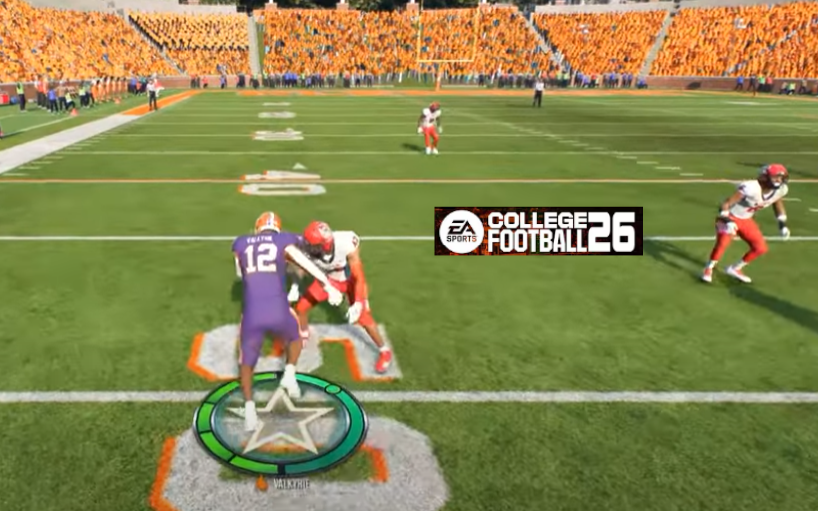
Defense in College Football 26 can feel overwhelming. Many players experience games where opponents score at will, making stops seem almost impossible. However, elite defense with College Football 26 Coins in this title is not about gimmicks or nonstop blitzing-it is about structure, predictability, and intelligent user control. Drawing from competitive Madden and College Football experience, this guide outlines the foundational steps required to consistently slow down modern offenses and win more games.
Step One: Win in the Play-Call Screen
Great defense starts before the snap. One of the most common mistakes players make is choosing formations and coverages that introduce unnecessary chaos. While many styles can work, the easiest and most reliable foundation is a nickel-based defense. Formations such as Nickel Over, Nickel 2–4, or Nickel 3–3–5 offer balance against both the run and pass without overcommitting.
Avoid extreme sets like Double Mug or Prevent as base defenses. While they have situational value, they limit flexibility and magnify mistakes. Nickel gives you a neutral platform to adjust from.
Step Two: Prioritize Drop-Zone Coverages
Your base play calls should focus on drop-zone concepts-specifically Tampa 2, Cover 3 Sky, and Cover 4 Drop. These coverages are powerful because they are predictable. Every defender goes where the play art says they will, every time.
This predictability is crucial. When you know exactly where your zones are, you can identify strengths, weaknesses, and adjustment opportunities. Match coverages like Cover 4 Palms can be effective, but they require deep knowledge of in-game match rules, which differ from real-life football concepts. For most players, drop zones simplify decision-making and reduce blown coverages.
Step Three: Use Coverage Shells to Disguise Intent
Before the snap, use the right stick to adjust your coverage shell. Cover 2 and Cover 4 shells are especially effective at disguising your true coverage while maintaining structural integrity. This creates hesitation for the quarterback and can disrupt timing-based offenses without requiring risky blitzes.
Step Four: Master the User Defender
The most important player on the field is your user defender. High-level players almost never user defensive linemen. Instead, they control a coverage defender-most often someone in a yellow hook or curl zone.
Yellow zones are ideal because mistakes are less catastrophic. If you miss slightly, you may give up a short completion, not a touchdown. Usering deep zones or flats is far riskier and limits your ability to impact the middle of the field, where most modern offenses attack.
Position your user in the middle, read route combinations, and actively carry crossers, seams, and corner routes longer than AI defenders would. Use controlled movement with the left stick and trigger sprint only when committing to a route. Usering is about discipline, anticipation, and awareness-not constant sprinting.
Step Five: Optimize Your User Personnel
Athleticism matters. Your user should be fast, tall, and agile-even if they are weaker against the run. Safeties often make better users than linebackers due to speed and coverage ratings. Sub-package adjustments, such as placing safeties at sub-linebacker, can dramatically improve your ability to defend crossers and RPOs.
Step Six: Prepare for What You See Every Game
Elite defense is about preparation. Identify the most common offensive concepts-RPOs, corner routes, and inside zone runs-and have answers ready.
For RPOs, minor alignment adjustments and disciplined user positioning can shut them down entirely. Against corner routes, coaching adjustments such as setting curl flats to 15–20 yards and manually converting defenders into curl flats can eliminate the window. These are not random reactions; they are rehearsed solutions practiced in advance.
Run defense follows the same principle. Gap-shooting with the backside linebacker, pinching the defensive line, or rolling a safety into the box are all viable tools. Each carries risk, so practice them in controlled environments before relying on them in competitive games.
Final Thoughts
Defense in College Football 26 is demanding, but it is far from impossible. By building your scheme around predictable zone structures, disciplined user control, and targeted preparation against common offenses, you can force mistakes, generate pressure, and swing games in your favor. This is real defensive coordination-film study, anticipation to buy NCAA 26 Coins, and execution translated into a virtual field. With these principles in place, stops become consistent, and wins follow naturally.
 Italiano
 English
 Arabic
 French
 Spanish
 Portuguese
 Deutsch
 Turkish
 Dutch
Dutch
 Russian
 Romaian
 Portuguese (Brazil)
 Greek
Greek
