


 Ban & Monetization Policy
 MyLiveRoom Rewards Program Rules & Eligibility
Key Differences Between a Dual Battery Isolator and a Conventional Relay Switch
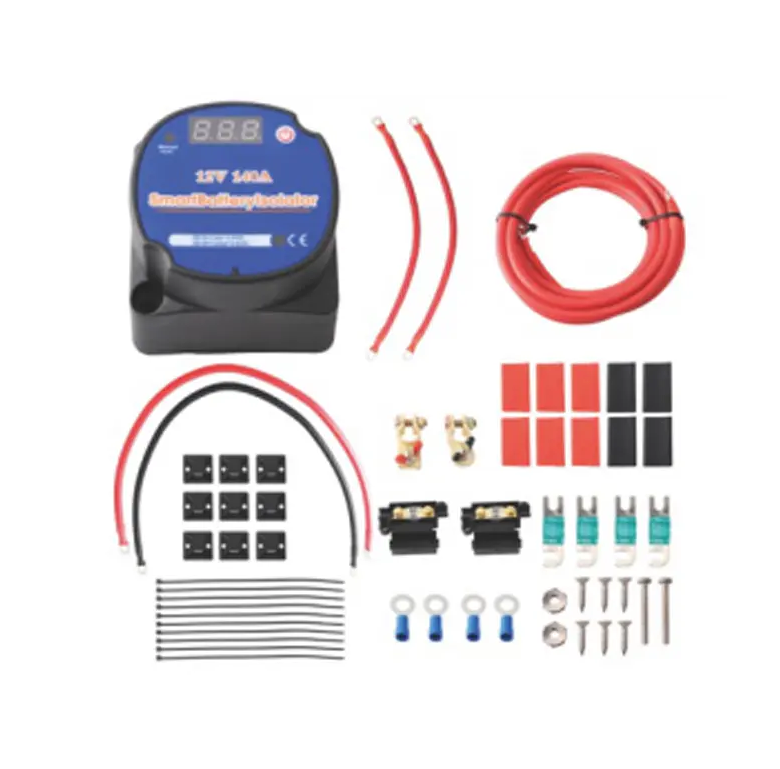
When setting up a dual-battery system in vehicles, boats, or off-grid equipment, one of the most important decisions involves choosing between a Dual Battery Isolator and a traditional relay. Although both devices are used to manage the connection between a primary and auxiliary battery, they function in significantly different ways and serve distinct purposes. Understanding the differences between a Dual Battery Isolator and a traditional relay helps ensure system efficiency, battery longevity, and reliable performance in various power management applications.
A traditional relay is a simple electromechanical switch that uses a small current to control a larger electrical load. In a basic dual-battery setup, a relay connects the main and auxiliary batteries whenever the vehicle's ignition is turned on, allowing both batteries to charge simultaneously from the alternator. While this method works, it lacks intelligence. The relay opens or closes based solely on ignition signals, with no consideration for battery voltage, charge state, or potential backflow. This design means that when the engine is off, the batteries can remain connected unless the relay is manually disconnected or controlled by an additional timer or logic circuit.
In contrast, a Dual Battery Isolator is specifically engineered for battery management. It typically includes smart circuitry, such as a voltage-sensitive relay (VSR) or solid-state technology, that actively monitors the voltage levels of the connected batteries. When the main battery reaches a preset charge level (indicating the engine is running and the alternator is producing current), the Dual Battery Isolator automatically connects the auxiliary battery to share the charging current. When the engine is turned off and the voltage drops, the isolator disconnects the two batteries, preventing power from flowing from one to the other. This ensures that the main battery retains enough charge to start the vehicle, regardless of how much energy the auxiliary battery consumes for accessories.
Another key difference lies in reliability and control. Traditional relays are mechanical devices that wear out over time due to repeated opening and closing. They can also stick in the “on” position, especially in high-vibration environments like off-road vehicles or marine equipment. Dual Battery Isolator units, particularly those with solid-state components, have no moving parts, which significantly increases durability and response precision. Furthermore, many modern Dual Battery Isolator systems include LED indicators, diagnostic features, and even Bluetooth or app-based monitoring for remote management—features that standard relays simply cannot offer.
Safety is another area where the two differ. Since traditional relays don't monitor voltage, they may inadvertently allow both batteries to discharge simultaneously if accessories continue to draw power after the engine is turned off. A Dual Battery Isolator, on the other hand, is designed to prevent such issues by disconnecting the batteries at low voltage thresholds, thereby protecting the starting battery from being drained.
In conclusion, while both a Dual Battery Isolator and a traditional relay can connect two batteries, the isolator offers smarter, more protective, and more efficient management. It not only improves charging efficiency and battery lifespan but also enhances overall system reliability and safety. For anyone building or upgrading a dual-battery setup, investing in a purpose-built Dual Battery Isolator is a superior choice compared to relying on a basic relay switch.
12V
OEM X Retrofitted vehicles, RVS, yachts, solar charging units
 Deutsch
 English
 Arabic
 French
 Spanish
 Portuguese
 Turkish
 Dutch
Dutch
 Italiano
 Russian
 Romaian
 Portuguese (Brazil)
 Greek
Greek
