


 Ban & Monetization Policy
 MyLiveRoom Rewards Program Rules & Eligibility
Exploring Whether a High Voltage Capacitor Unit Has Built-in Discharge Functionality
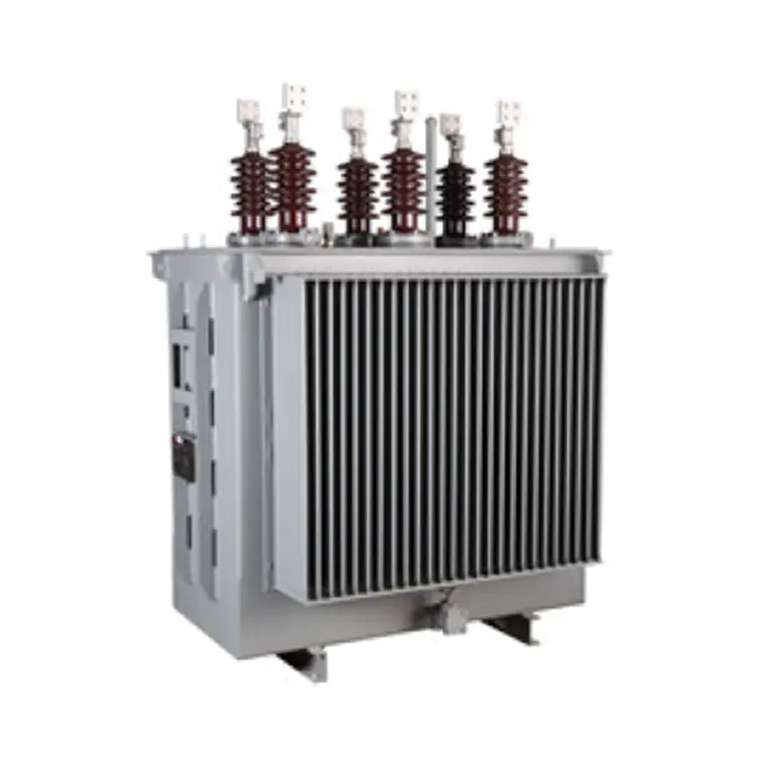
The High Voltage Capacitor Unit plays a crucial role in modern electrical systems, particularly in power factor correction, voltage stabilization, and filtering applications. As these units store large amounts of electrical energy, a key safety concern arises: What happens to the stored energy once the power is turned off? This leads to the critical question: Does a High Voltage Capacitor Unit have an automatic discharge function?
The answer is not universally “yes” or “no” as it largely depends on the design and manufacturer specifications of the particular unit. However, most high-quality high-voltage capacitor Units today are equipped with some form of automatic discharge functionality, which serves to gradually reduce the stored charge in the capacitor to a safe level once the power supply is disconnected. This feature is vital in preventing accidental electric shock, equipment damage, or dangerous maintenance conditions.
The automatic discharge system typically operates through internal or external resistive circuits that are connected in parallel with the capacitor elements. Once the voltage supply is removed, these resistors provide a controlled path for the residual charge to dissipate. Depending on the design, the full discharge may take several seconds to several minutes, and it is usually engineered to bring the terminal voltage down to a predefined safe level—often below 75 volts—within 5 minutes, as per IEC or IEEE safety standards.
If a High Voltage Capacitor Unit does not incorporate an integrated discharge system, an external discharge resistor or a discharge coil may be required as part of the installation. However, relying solely on external components may introduce safety risks if maintenance personnel are unaware of the configuration or if the discharge circuit fails. For this reason, the trend in industrial and utility-grade capacitors has strongly shifted toward integrated automatic discharge features.
It is important to understand that even with an automatic discharge system, residual voltage may still exist immediately after power-off. Thus, many electrical safety protocols require grounding or short-circuiting the capacitor terminals before performing any maintenance or inspection. Labels and warning signs are typically affixed to High Voltage Capacitor Units to remind technicians of this requirement.
Another consideration is that certain high-speed switching operations in automated environments may not allow enough time for a full discharge between cycles. In such cases, specialized designs or faster discharge mechanisms might be necessary. This reinforces the importance of selecting a High Voltage Capacitor Unit based not only on capacity and voltage rating but also on its discharge capabilities and compliance with operational cycles.
In conclusion, automatic discharge functionality in a High Voltage Capacitor Unit is not only a convenience—it is a fundamental safety feature. While most modern capacitors include this by default, users and electrical engineers must still verify the specifications and test discharge behavior during commissioning. Proper installation, regular maintenance checks, and adherence to electrical safety standards ensure that the capacitor operates efficiently and safely throughout its service life.
Rated Values Range for Assembled High Voltage Capacitor:
Rated Voltage Range: 3kV-46kV
Rated Capacity Range: 600kvar-10000kvar
 French
 English
 Arabic
 Spanish
 Portuguese
 Deutsch
 Turkish
 Dutch
Dutch
 Italiano
 Russian
 Romaian
 Portuguese (Brazil)
 Greek
Greek
