


 Ban & Monetization Policy
 MyLiveRoom Rewards Program Rules & Eligibility
Which Production Method Wastes Less Water – YongXing Seamless Yoga Sets or Traditional Stitching
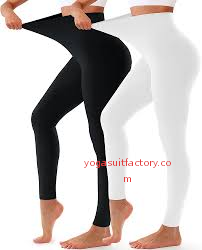
A conscious consumer examines activewear labels for sustainability claims. Seamless Yoga Sets produced through circular knitting generate minimal production waste, while traditional cut‑and‑sew garments discard significant fabric. YongXing manufactures the former, but does seamless technology truly outperform conventional methods in environmental impact, or do hidden factors shift the balance?
Traditional cut‑and‑sew activewear begins with large rolls of knitted or woven fabric. A cutting machine or human operator places pattern pieces onto this fabric, tracing outlines for each garment component – front panel, back panel, sleeves, waistband, and pockets. The space between these pattern pieces becomes scrap: small irregular shapes, curved remnants, and narrow strips that cannot form a complete garment. Depending on pattern efficiency and fabric width, this waste ranges from ten to twenty percent of the original material. For a factory producing fifty thousand leggings monthly, that waste represents thousands of kilograms of polyester, nylon, or spandex destined for landfills or incineration. Some facilities recycle clean scrap into low‑value products like stuffing or insulation, but most mixed‑fiber waste (elastane blends) resists conventional recycling.
Seamless knitting eliminates the cutting stage entirely. A circular knitting machine directly produces a three‑dimensional tube of fabric shaped to the human body. The machine knits yarn into a continuous structure with integrated zones for bust, waist, hips, and limbs. No pattern pieces require arrangement, so no inter‑pattern gaps exist. The only waste comes from trimming the tube ends and removing small test sections during quality checks – typically less than two percent of total material. Seamless Yoga Sets from YongXing achieve waste levels approaching one percent for standard styles. This efficiency reduces raw material consumption proportionally: for every one hundred kilograms of yarn entering the factory, ninety‑nine kilograms become wearable garments instead of scrap.
Water usage presents another stark contrast. Cut‑and‑sew production requires fabric dyeing before cutting, or garment dyeing after sewing. Each dyeing batch consumes large water volumes for preparation, dye application, rinsing, and after‑treatment. A typical kilogram of dyed activewear fabric requires sixty to ninety liters of water across the entire wet processing chain. Seamless knitting can use solution‑dyed yarns – pigment added to the polymer melt before extrusion. This method eliminates nearly all dyeing water because color becomes part of the fiber itself. Solution dyeing reduces water consumption by approximately eighty percent compared to conventional exhaust dyeing. Additionally, seamless garments often avoid the scouring and bleaching steps required for cut‑and‑sew fabrics, saving further water and chemical inputs.
Energy comparisons reveal complexity. Circular knitting machines operate continuously at high speeds, consuming electricity for each rotation. However, cut‑and‑sew production requires energy for knitting the base fabric, then additional energy for cutting (electric motors for spreaders and cutters), sewing (industrial sewing machines running eight to twelve hours daily), and finishing (steam pressing, folding, bagging). Seamless knitting combines the fabric formation and shaping steps into one operation, eliminating cutting and reducing sewing by seventy to ninety percent (only waistbands, cuffs, and closures require stitching). Total energy per garment often favors seamless, though the difference narrows when factoring in solution dyeing's higher temperature requirements for certain synthetic fibers.
Chemical use differs substantially between the two methods. Cut‑and‑sew fabrics receive multiple chemical treatments: lubricants for knitting, anti‑static agents during cutting, fusible interfacing adhesives, and fabric softeners in finishing. Each treatment adds chemical load to wastewater. Seamless garments typically use fewer auxiliary chemicals because the knitting process requires less lubrication (modern machines use air‑assisted yarn feeding) and no cutting aids. The elimination of dyeing for solution‑dyed seamless products removes an entire class of chemicals: disperse dyes, leveling agents, dispersants, and reducing agents. A life cycle assessment comparing the two methods found that seamless production reduced aquatic toxicity potential by forty to sixty percent per garment.
Transportation and packaging present equal challenges for both methods. Seamless garments weigh slightly less than cut‑and‑sew equivalents because they contain no overlapping seam allowances or multiple fabric layers. Lower weight reduces shipping fuel consumption per item. However, seamless factories often locate far from end consumers, potentially increasing transport distances. Packaging requirements remain similar: polybags, cardboard boxes, and hang tags appear with both garment types. Neither method holds a clear advantage in this category, so conscientious buyers focus on brand commitments to recycled or biodegradable packaging.
End‑of‑life considerations favor neither method decisively. Both seamless and cut‑and‑sew activewear typically use nylon or polyester blended with elastane. This combination resists mechanical recycling because elastane fibers break during shredding and contaminate the recycled output. Chemical recycling technologies exist but remain expensive and unavailable in most regions. Seamless garments contain no seam tapes or bonded reinforcements that complicate recycling, yet the fundamental fiber blend problem persists. Some manufacturers now produce seamless items from mono‑material nylon (without elastane), enabling closed‑loop recycling. YongXing offers selected Seamless Yoga Sets using single‑polymer construction for easier future recycling.
The cut‑and‑sew industry has implemented waste reduction strategies that narrow the environmental gap. Marker making software optimizes pattern placement to minimize gaps between pieces. Some factories reuse fabric scraps as wiping rags or sell them to insulation manufacturers. However, these measures cannot eliminate the inherent waste from cutting two‑dimensional fabric into three‑dimensional shapes. A curved armhole or a contoured waistband will always generate curved scraps. Seamless knitting bypasses this geometric constraint by producing shape directly, representing a fundamental rather than incremental improvement.
Consumer behavior influences actual environmental impact more than production method alone. A seamless garment washed in cold water, air dried, and worn for three years generates far lower lifetime impact than a cut‑and‑sew garment washed hot, tumble dried, and discarded after six months. Seamless products typically retain shape longer because no stitched seams stretch or relax unevenly. This durability encourages longer use, delaying disposal. Surveys indicate seamless activewear owners replace their garments thirty percent less frequently than owners of conventional leggings, amplifying the initial production savings.
For the environmentally focused athlete, https://www.yogasuitfactory.com/product/sports-yoga-jumpsuits/ offers a range of Seamless Yoga Sets designed with circular knitting and solution dyeing. Each garment represents kilograms of diverted fabric waste and liters of saved dyeing water. The choice between seamless and cut‑and‑sew ultimately asks whether an industry can abandon the scrap pile of traditional manufacturing. When a yoga practice emphasizes mindfulness toward the planet, does the outfit on your body reflect that same intention through its very construction?
 Russian
 English
 Arabic
 French
 Spanish
 Portuguese
 Deutsch
 Turkish
 Dutch
Dutch
 Italiano
 Romaian
 Portuguese (Brazil)
 Greek
Greek
