


 Ban & Monetization Policy
 MyLiveRoom Rewards Program Rules & Eligibility
DeLian's Answer: Why a Parked Car Can Still Suffer Auto Bearing Failure
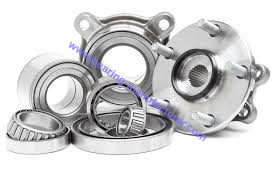
A vehicle sits in a garage, used only on weekends. The odometer shows low numbers, perhaps thirty thousand miles across five years. The owner feels confident, assuming minimal wear equals perfect mechanical health. Then a humming noise emerges from a wheel hub. A mechanic diagnoses a failed Auto Bearing. How can a component with so little rotational mileage require early replacement? This paradox frustrates many car owners who paid for quality parts expecting years of service. The answer involves factors far beyond simple rotation counts. Bearing-Manufacturer, a specialist in precision components, regularly fields this exact question from puzzled customers. Could your garage-kept car actually accelerate bearing degradation through neglect rather than use?
Several mechanisms explain premature failure in low-mileage vehicles. The most common culprit remains moisture intrusion. A bearing's internal cavity contains grease designed to protect steel surfaces. When a car sits for weeks between drives, the bearing housing cools and warms with daily temperature cycles. This thermal pumping action draws humid air past seals and into the bearing. Water droplets condense on polished raceways and rolling elements. Rust forms quickly in these microscopic pits. Once oxidation begins, the smooth surface becomes abrasive. Each subsequent drive grinds these rust particles into the grease, creating a lapping compound that wears down both races and balls. High-mileage cars avoid this problem because constant heat keeps internal moisture evaporated and expelled.
A second factor involves vibration without rotation. A parked car experiences vibration from nearby traffic, passing trains, or even wind buffeting. These small oscillations, over months of inactivity, cause a phenomenon called false brinelling. The rolling elements sit in fixed positions against the raceways. External vibration causes microscopic back-and-forth motion without full rotation. This fretting action displaces lubricant from contact points. Metal touches metal directly. Tiny wear debris accumulates, then oxidizes into an abrasive red powder. When the car finally drives again, this powder acts like sand inside the bearing. The resulting damage often appears as evenly spaced wear marks matching the roller pitch. Owners mistakenly blame part quality when the real cause was parking location.
Seal design plays another crucial role. Low-cost bearings use single-lip rubber seals that block large particles but allow moisture vapor passage. Premium bearings employ triple-lip labyrinth seals with integrated grease reservoirs. A vehicle driven daily keeps seals slightly pressurized from internal heat, actively resisting contamination ingress. A stationary vehicle loses this pressure advantage. The seals relax. Capillary action pulls moisture past even intact seals over sufficient time. Manufacturers like DeLian address this through seal material selection and grease formulation. Their production process applies a specific grease viscosity that clings to surfaces even during extended idle periods. Standard greases drain away from upper raceways after weeks of rest, leaving steel exposed to corrosion. This material science distinction separates short-lived bearings from those lasting a decade regardless of mileage.
Installation errors disproportionately affect low-mileage bearings. A careless mechanic using an impact wrench on a hub nut can dent a bearing's raceway before the car leaves the shop. This dent creates a stress concentration point. Under normal daily driving, the dent might cause a mild noise that worsens slowly. In a low-mileage car, the dent sits unchanged for months, then receives sudden heavy loading when the car finally drives a long distance. The concentrated stress exceeds the material's fatigue limit in a single trip. The bearing fails spectacularly despite having only hundreds of rotation cycles. Proper installation requires torque wrenches and clean work surfaces. Unfortunately, many repair shops rush this step. A bearing from a quality supplier cannot compensate for poor fitting practices.
Storage conditions separate from driving habits matter enormously. A car parked on an unpaved surface experiences constant moisture rising from the ground. This humidity attacks the bearing from below. A car stored near an ocean faces salt-laden air that accelerates all corrosion processes. A car kept in an uninsulated garage undergoes extreme temperature swings, maximizing the thermal pumping effect described earlier. Simply moving a vehicle to a climate-controlled space or laying down a vapor barrier under the parking spot extends bearing life substantially. Some owners rotate their parked cars monthly, rolling them forward several feet to change the contact points between rollers and raceways. This simple habit prevents false brinelling and redistributes grease.
Grease degradation occurs through time rather than use. Bearing grease contains thickeners, base oils, and additives. Over roughly three to five years, the base oil separates from the thickener regardless of rotation. This separation produces a hard, waxy residue that blocks lubricant flow to critical contact zones. A bearing driven weekly experiences shear forces that remix the separated components. A stationary bearing allows permanent separation. When the car finally moves again, the grease offers zero protection. The bearing runs dry from the first rotation. Manufacturers specify grease life in calendar years, not miles. Installing a fresh bearing then parking the car for four years wastes the component's potential service life. Planned maintenance should include bearing replacement based on time intervals for low-mileage vehicles.
Contamination pathways differ between driven and stored vehicles. A car in motion generates air pressure that generally pushes contaminants away from seals. A stationary car accumulates dust and road salt on exterior surfaces. These particles work into seal lips through simple gravity and occasional vibration. Once past the seal, ordinary dirt mixes with grease to form an abrasive paste. A low-mileage car may have its bearings exposed to this contamination for years before accumulating significant rotation distance. The total damage per rotation far exceeds that of a high-mileage bearing that ingested the same contamination over a shorter calendar period. This explains why some bearings fail at twenty thousand miles while identical parts last sixty thousand miles in taxi service operating continuously.
The manufacturing tolerance stack increases failure probability in low-use scenarios. Every bearing has slight geometric imperfections within accepted limits. A high-mileage application smooths these small irregularities through gradual wear, creating a polished contact surface. A low-mileage bearing never receives this break-in period. Small asperities remain sharp. When finally loaded, these high spots experience extreme contact pressure exceeding material strength. Micro-cracks form and propagate rapidly. A bearing that would have lasted fifty thousand miles fails at five thousand miles simply due to lack of early gentle wear. Manufacturers cannot eliminate all microscopic roughness economically. The intended usage pattern includes regular operation to achieve expected life. Storing a car changes this fundamental assumption.
Returning to the original question of premature failure despite low mileage: the answer involves storage conditions, vibration exposure, seal effectiveness, installation quality, grease chemistry, contamination pathways, and break-in requirements. A car owner cannot assume that low miles guarantee bearing health. Regular inspection remains essential regardless of odometer readings. A simple wheel shake test or listening for hub noise during slow turns provides early warning. When replacement becomes necessary, choosing a component from a reputable source matters greatly. https://www.bearing-manufacturer.com/product/ offers a range of auto bearings manufactured under ISO quality systems, with options for standard and custom specifications. Their production facility maintains strict humidity controls during storage and assembly, directly addressing many environmental failure causes discussed here. For the owner of a seldom-driven vehicle, understanding these hidden failure mechanisms transforms maintenance decisions. Given that parking conditions, seal quality, and grease chemistry often matter more than rotation counts, does your low-mileage car hide a ticking mechanical time bomb in each wheel hub?
 French
 English
 Arabic
 Spanish
 Portuguese
 Deutsch
 Turkish
 Dutch
Dutch
 Italiano
 Russian
 Romaian
 Portuguese (Brazil)
 Greek
Greek
