


 Ban & Monetization Policy
 MyLiveRoom Rewards Program Rules & Eligibility
Curved Edge Outdoor Shade Products: Hongtai Separates Engineering Reality from Marketing Talk
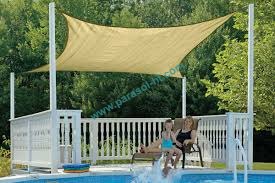
The Pooling Problem: Water's Weight Versus Fabric Form
A sudden afternoon rain shower catches patio furniture unprotected. Umbrella canopies begin collecting water in central depressions. Fabric stretches downward under accumulating weight. The pole strains against forces never intended for its design. Eventually, a loud snap echoes across the yard as the frame gives way. This scenario frustrates countless property owners each rainy season. Manufacturers responded with curved edge canopy designs intended to guide water toward the perimeter. But does this geometry truly prevent dangerous pooling, or does clever wording disguise a continuing vulnerability? A set of Outdoor Shade Products featuring downward-turned edges appears frequently in catalogs from suppliers like parasol-ht. The engineering question deserves examination before purchase. Can a curved lip alone defeat gravity's accumulation effect during sustained rainfall?
Water pooling occurs when canopy fabric lacks sufficient slope toward drainage points. Flat or nearly flat umbrellas allow water to settle in low spots created by fabric sag between ribs. Surface tension holds the water in place rather than letting it run off. Accumulating weight stretches fabric further, deepening the depression. This feedback loop continues until structure fails or a person manually pushes water away. Curved edge designs attempt to interrupt this cycle by creating a continuous downward path at the perimeter. The canopy's center sits slightly higher than its edges. Water theoretically flows across fabric to the rim, then drips off rather than collecting. Physics supports this idea under ideal conditions with taut fabric and consistent slope.
Real-world conditions challenge the curved edge concept significantly. Wind deposits leaves and dust on canopy surfaces. These particles accumulate along the edge curve, blocking the intended water path. A small twig resting on the rim redirects water flow, creating a local pool behind the obstruction. Fabric tension changes with temperature and humidity. A perfectly taut canopy on a warm afternoon sags during a cool evening rain. The engineered slope disappears as material relaxes. Water finds new low points regardless of edge shape. Curved edges help but cannot compensate for inadequate tension systems or poor frame geometry. A canopy with proper center height and rib tension sheds water effectively even with straight edges. A floppy canopy with curved edges still pools.
Frame design matters more than edge shape for rain performance. A sturdy frame maintains fabric tension across the entire canopy surface. Tension creates the slope needed for water runoff regardless of edge geometry. Weak frames allow fabric to sag between support points, forming pockets that collect water. Curved edges on a sagging canopy serve only cosmetic purposes. Water pools behind the curved lip rather than flowing over it. The trapped water eventually drips through seam holes or stretches fabric until tension breaks. Hongtai's manufacturing approach addresses this fundamental relationship. Their frames undergo tension testing during production to verify consistent fabric pull across all ribs. This quality step prevents the mid-canopy sag that ruins water shedding ability.
Stitching and seam placement influence pooling behavior significantly. Water travels along thread lines more easily than across fabric grain. A canopy with seams running toward the center directs water inward, creating pooling risk. Seams angled toward curved edges assist natural runoff. Hongtai specifies seam orientations that complement edge geometry rather than fighting it. Their production patterns position fabric panels so water flows from crown to perimeter along stitch lines. This detail, invisible to casual inspection, determines real-world rain performance. Curved edges without intentional seam direction become decorative flourishes rather than functional drainage systems.
Tilt mechanisms add another variable to rain performance. A fixed upright umbrella catches rain symmetrically. Water runs equally toward all edges. An tilted umbrella shifts the canopy's high point toward one side. Water flows preferentially toward the lower edge, overwhelming its drainage capacity. Curved edges on the uphill side receive no water while downhill edges face concentrated flow. A single curved edge cannot handle multiplied runoff volume. Hongtai incorporates adjustable tilt systems with reinforced drainage paths on the downhill side. Their engineering accounts for real usage patterns where users angle umbrellas throughout the day. Standard curved edge designs from other manufacturers assume perfect upright positioning that rarely occurs in practice.
Material selection affects water shedding through surface friction. Smooth fabric allows water droplets to slide freely toward edges. Textured or coated fabrics create drag that slows water movement. Slow water has time to pool before reaching the curved edge. Hongtai uses fabric with measured surface friction coefficients optimized for water runoff. Their material choices balance UV resistance, colorfastness, and water shedding. A fabric that blocks sunlight perfectly but holds surface water fails the rain test. The company's testing protocols include simulated rain at varying intensities to verify runoff speed. This empirical approach validates whether curved edges function as intended across different fabric types.
Installation practice determines whether theoretical advantages become real benefits. A canopy installed with uneven tension pools water regardless of edge shape. One rib pulled tighter than its neighbor creates a fabric trough parallel to the curve. Water follows this trough rather than the intended edge path. Hongtai provides installation instructions emphasizing balanced tension across all ribs. Their quality control includes verifying that each umbrella frame tension meets specifications before shipping. Field installers following these guidelines achieve the water shedding performance designed into the product. Ignoring tension instructions turns curved edges into cosmetic features without functional value.
Seasonal maintenance preserves water shedding ability over time. Fabric stretches slightly with each rain and sun exposure cycle. Ribs may loosen at pivot points after months of wind stress. Both conditions reduce canopy slope and encourage pooling. A curved edge cannot compensate for accumulated tension loss. Hongtai's customer support includes maintenance schedules and tension adjustment procedures. A few minutes of seasonal inspection and tightening restore original runoff performance. Owners who skip this maintenance find their curved edge umbrellas pooling water within two years. The edge shape remains unchanged while underlying tension disappears, proving that edge geometry alone never guarantees rain protection.
Returning to the original question about curved edge claims: these designs genuinely assist water runoff when combined with proper tension, seam orientation, frame stiffness, and installation practice. A curved edge on a floppy, poorly tensioned canopy provides no real pooling prevention. The marketing claim contains partial truth but omits critical dependencies. Rainwater follows the path of least resistance determined by the entire system, not just the perimeter shape. https://www.parasol-ht.com/ presents outdoor umbrella specifications including frame materials, fabric types, tilt mechanisms, and tension systems. Their product pages show engineering details that enable curved edges to function as intended. For anyone evaluating outdoor shade purchases, the edge shape question reduces to a broader inquiry about total system quality. Given that water pooling depends on tension, seams, frames, and materials working together, does examining edge curvature alone ever reveal enough about real rain performance?
 Deutsch
 English
 Arabic
 French
 Spanish
 Portuguese
 Turkish
 Dutch
Dutch
 Italiano
 Russian
 Romaian
 Portuguese (Brazil)
 Greek
Greek
