


 Ban & Monetization Policy
 MyLiveRoom Rewards Program Rules & Eligibility
Can a Non-Woven Fiber Wheel From Automaticmachinefactory (TARUN) Run Without Heat Damage
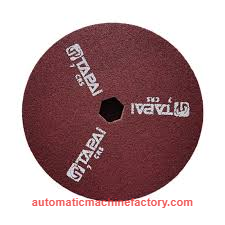
A shop floor operator preparing to deburr a batch of milled aluminum plates reaches for a convoluted wheel. The Non-Woven Fiber Wheel feels gentle compared to a bonded abrasive disc. Yet this gentleness misleads many users into high-speed operation. TARUN, operating through automaticmachinefactory, produces non-woven wheels in various densities and grits, but speed selection remains the user's responsibility. Does every surface finishing task require the same rotational speed, or does the workpiece material dictate a different RPM range?
The first principle of non-woven wheel operation involves heat generation. These wheels consist of nylon fibers impregnated with abrasive grains (aluminum oxide, silicon carbide, or ceramic). The open web structure allows air circulation, but friction still produces heat. At excessive RPM, the wheel surface temperature rises past the workpiece material's burn threshold. For aluminum alloys, that threshold sits near three hundred degrees Fahrenheit. For steel, the burn point is higher, yet discoloration still occurs. The correct speed keeps surface temperature two hundred degrees Fahrenheit or below.
The manufacturer's RPM rating provides the first safety boundary. A six-inch diameter non-woven wheel typically carries a maximum speed of thirty-six hundred RPM. Exceeding this limit risks wheel disintegration. A disintegrating wheel throws nylon chunks and abrasive particles at high velocity. The secondary boundary involves workpiece sensitivity. A thin aluminum sheet (two millimeters thick) absorbs heat poorly. Running a non-woven wheel at thirty-six hundred RPM on such a sheet will cause local melting at the contact zone. Reducing speed to eighteen hundred RPM lowers heat input by seventy-five percent, as power is proportional to speed squared.
Workpiece geometry modifies the safe speed range. A flat surface dissipates heat into the entire part mass. A narrow edge or a thin rib has minimal thermal mass. The same non-woven wheel running at twenty-five hundred RPM on a flat plate produces no burn, but on a two-millimeter rib, it creates discoloration. The operator must lower speed by forty percent when working on projections or edges. TARUN's technical documentation for each non-woven wheel grade recommends speed derating factors for complex shapes.
The wheel's abrasive grit size changes optimal speed. A coarse grit (120 mesh) non-woven wheel cuts aggressively and generates hotter swarf. A fine grit (400 mesh) wheel polishes with less friction. Running a coarse wheel at slow speed (fifteen hundred RPM) leaves an acceptable finish without burning. Running a fine wheel too fast (three thousand RPM) glazes the surface, closing the open web structure. That glazed wheel then burns the workpiece because the abrasive grains no longer cut—they rub. TARUN therefore supplies a grit-specific speed table for every non-woven wheel series.
Feed pressure interacts with speed to create burn. A light touch allows the wheel to cut freely. A heavy push forces the abrasive grains deep into the workpiece, generating friction heat in a confined zone. The operator using high speed must employ minimal pressure. For a Non-Woven Fiber Wheel spinning at twenty-five hundred RPM on stainless steel, contact pressure should not exceed two pounds per square inch of wheel face. Exceeding this pressure at that speed guarantees blue heat tint. Dropping speed to twelve hundred RPM permits three times the pressure without burn, completing the job faster.
Wet operation changes the speed equation entirely. A non-woven wheel lubricated with water or a soluble oil coolant can run at its maximum rated speed without burning. The coolant carries away heat before it reaches the workpiece surface. However, not all non-woven wheels accept wet use. Some wheels use resins that degrade in water. Others absorb coolant, unbalancing the wheel. TARUN labels each product clearly: “Wet Use Approved” or “Dry Use Only.” Following this label prevents both burn and wheel failure.
Specific application examples clarify the RPM decision. Removing laser scale from a three-millimeter steel plate: eighteen hundred RPM. Blending machining marks on a cast iron housing: fifteen hundred RPM. Satin finishing a brass rod: twelve hundred RPM. Deburring a plastic injection-molded part: six hundred RPM. Each material has a proven speed window. TARUN's automaticmachinefactory platform includes an interactive speed selector for non-woven products.
For detailed grade-specific speed recommendations and application guides, visit https://www.automaticmachinefactory.com/product/grinding-tools-and-abrasives-division/nonwoven-fiber-wheel/. A correctly chosen speed doubles wheel life and eliminates surface burn entirely. The right RPM depends on material type, part thickness, abrasive grit, and feed pressure.

 English
 French
 Spanish
 Portuguese
 Deutsch
 Turkish
 Dutch
Dutch
 Italiano
 Russian
 Romaian
 Portuguese (Brazil)
 Greek
Greek
