


 Ban & Monetization Policy
 MyLiveRoom Rewards Program Rules & Eligibility
HCL Storage Tank for Critical Industrial Safety Applications
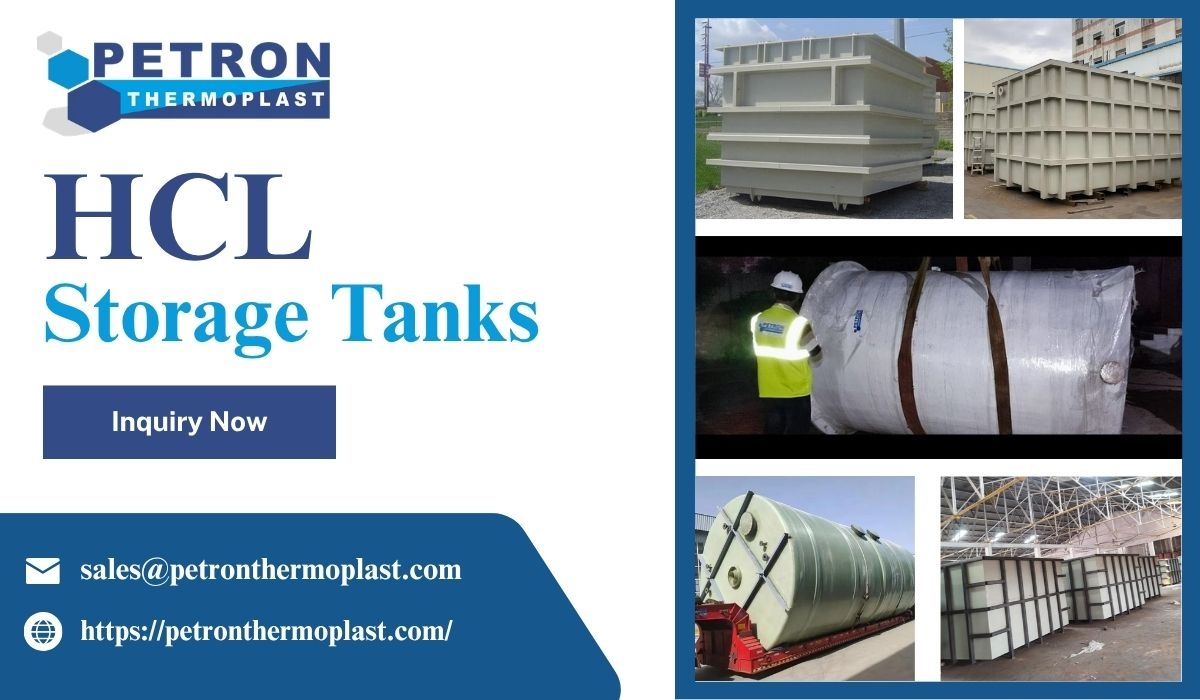
Hydrochloric acid (HCl) is a highly corrosive chemical widely used across industries such as chemical processing, steel pickling, water treatment, pharmaceuticals, and textile manufacturing. Due to its aggressive nature, the storage of HCl requires specialized containment systems engineered to ensure maximum safety, durability, and compliance with industrial standards. An HCL storage tank designed for critical industrial safety applications provides secure containment, prevents leakage, and protects both personnel and infrastructure.
This article presents a technical overview of HCL storage tanks, focusing on design, material selection, safety features, and performance requirements in demanding industrial environments.
Properties of Hydrochloric Acid and Storage Challenges
Hydrochloric acid is a strong mineral acid with the following characteristics:
- Highly corrosive to metals and many materials
- Releases acidic fumes that can cause environmental hazards
- Reacts with various substances, generating heat and gases
- Requires controlled storage conditions
Key Storage Challenges
- Material degradation due to corrosion
- Risk of leakage and chemical exposure
- Structural weakening over time
- Safety hazards for personnel and equipment
To address these challenges, HCL storage tanks must be designed with corrosion-resistant materials and advanced safety features.
Materials Used in HCL Storage Tanks
The selection of material is critical for ensuring chemical compatibility and long-term performance.
Common Materials
FRP (Fiber Reinforced Plastic)
- Excellent corrosion resistance
- High strength-to-weight ratio
- Suitable for large capacity tanks
HDPE (High-Density Polyethylene)
- Good chemical resistance
- Flexible and impact-resistant
- Suitable for moderate temperature applications
PP (Polypropylene)
- Resistant to acids and alkalis
- Suitable for industrial chemical storage
PVDF (Polyvinylidene Fluoride)
- Superior chemical resistance
- High temperature stability
- Suitable for high-purity and aggressive applications
Each material is selected based on concentration, temperature, and storage conditions of hydrochloric acid.
Design Considerations for Safety-Critical Applications
Structural Integrity
- Reinforced tank walls to withstand hydrostatic pressure
- Structural supports for large capacity tanks
- Resistance to mechanical stress and impact
Capacity and Configuration
- Vertical or horizontal tank design
- Custom capacities based on process requirements
- Space-efficient layouts
Lining and Coating
- Internal linings to enhance corrosion resistance
- Multi-layer construction for added protection
- Smooth internal surfaces to prevent buildup
Venting and Pressure Control
- Proper venting systems to release fumes
- Pressure relief valves to prevent over-pressurization
- Flame arrestors for hazardous environments
Key Safety Features of HCL Storage Tanks
Leak-Proof Construction
- Seamless fabrication techniques
- High-quality welding and joints
- Use of compatible sealing materials
Secondary Containment
- Bund walls or containment systems
- Prevents environmental contamination in case of leakage
Level Monitoring Systems
- Sensors for real-time level indication
- Prevents overfilling and spillage
Chemical Compatibility
- Materials selected based on acid concentration
- Resistance to long-term chemical exposure
Fire and Hazard Protection
- Non-reactive materials
- Compliance with safety regulations
Technical Specifications
Typical specifications of HCL storage tanks include:
- Capacity: 500 liters to 100,000+ liters
- Operating Temperature: Ambient to moderate temperatures
- Wall Thickness: Designed based on load and chemical properties
- Pressure: Atmospheric or low-pressure applications
- Standards: ASTM, ISO, DIN
Manufacturing Process
Material Selection
- Selection based on chemical compatibility and operational requirements
Fabrication
- Rotational molding (for HDPE tanks)
- Filament winding (for FRP tanks)
- Thermoplastic welding (for PP and PVDF tanks)
Quality Testing
- Hydrostatic testing
- Leak testing
- Material inspection
- Dimensional verification
Applications in Industrial Sectors
Chemical Processing Plants
Used for storage and handling of hydrochloric acid in production processes.
Steel and Metal Treatment
Used in pickling processes to remove rust and scale.
Water Treatment Facilities
Used for pH control and chemical dosing systems.
Pharmaceutical Industry
Used in controlled chemical storage applications.
Textile Industry
Used in dyeing and processing operations.
Advantages Over Conventional Storage Systems
|
Parameter |
HCL Storage Tank |
Metal Tank |
|
Corrosion Resistance |
Excellent |
Poor |
|
Maintenance |
Low |
High |
|
Service Life |
Long |
Short |
|
Safety |
High |
Moderate |
Installation Guidelines
Site Preparation
- Level and stable foundation
- Adequate space for maintenance
Piping Integration
- Use compatible piping materials
- Ensure leak-proof connections
Safety Measures
- Install secondary containment
- Provide proper ventilation
- Ensure access to emergency systems
Maintenance and Inspection
Routine Maintenance
- Visual inspection for damage or wear
- Checking seals and fittings
- Cleaning internal surfaces
Periodic Testing
- Leak detection tests
- Structural integrity checks
- Monitoring of chemical compatibility
Compliance and Standards
HCL storage tanks must comply with international safety and quality standards:
- ISO 9001 for quality management
- ASTM standards for material performance
- Environmental and safety regulations
Customization Options
Manufacturers offer tailored solutions based on specific requirements:
- Custom sizes and capacities
- Specialized linings and coatings
- Integration with automation systems
- Additional safety features
Sustainability Considerations
- Long lifecycle reduces material waste
- Recyclable thermoplastic materials
- Reduced need for frequent replacement
- Environmentally safe containment
Role in Industrial Safety Systems
HCL storage tanks are a critical component of industrial safety infrastructure:
- Prevent chemical leakage and contamination
- Protect personnel from hazardous exposure
-
{
"@context": "https://schema.org",
"@type": "BlogPosting",
"headline": "HCL Storage Tank for Critical Industrial Safety Applications",
"description": "<p class="MsoNormal" style="mso-margin-top-alt: auto; mso-margin-bottom-alt: auto; line-height: normal;"><span style="font-size: 12.0pt; font-family: 'Times...",
"image": "https://cloud.myliveroom.com/storage/bucket-objects/1/uploads/photos/2026/05/mylivepics_71fb2e2f6481a3dfa7cd921cfb2e02e1.jpg",
"author": {
"@type": "Person",
"name": "Petron Thermoplast",
"url": "https://myliveroom.com/petronthermoplast"
},
"publisher": {
"@type": "Organization",
"name": "Myliveroom — Live Events & Online Communities",
"url": "https://myliveroom.com"
},
"datePublished": "2026-05-04 09:53:58",
"dateModified": "2026-05-04 09:53:58",
"mainEntityOfPage": {
"@type": "WebPage",
"@id": "https://myliveroom.com/blogs/82794/HCL-Storage-Tank-for-Critical-Industrial-Safety-Applications"
},
"url": "https://myliveroom.com/blogs/82794/HCL-Storage-Tank-for-Critical-Industrial-Safety-Applications",
"articleSection": "Other",
"keywords": "HCL_Storage_Tank, HCL_Tank, HCL_Tank_Manufacturer, HCL_Storage_Tank_Supplier",
"wordCount": "65535",
"commentCount": "",
"interactionStatistic": [{
"@type": "InteractionCounter",
"interactionType": "https://schema.org/CommentAction",
"userInteractionCount": ""
},
{
"@type": "InteractionCounter",
"interactionType": "https://schema.org/ViewAction",
"userInteractionCount": ""
}
]
}
 Dutch
Dutch
 English
 Arabic
 French
 Spanish
 Portuguese
 Deutsch
 Turkish
 Italiano
 Russian
 Romaian
 Portuguese (Brazil)
 Greek
Greek
