


 Ban & Monetization Policy
 MyLiveRoom Rewards Program Rules & Eligibility
Physical vs Chemical Sunscreen, Everything You Need to Know Before Buying
Introduction
Choosing between physical vs chemical sunscreen isn’t just about texture or finish, it directly influences how your skin handles daily sun exposure. Some formulas act as a surface-level shield, while others work beneath, managing UV rays in a completely different way.
So which one actually fits your skin, your routine, and your environment? The answer isn’t one-size-fits-all, and understanding the difference can completely change how you approach sun protection.
Why Choosing the Right Sunscreen Matters
Sun exposure does more than cause tanning, it gradually affects texture, tone, and overall appearance. Over time, unprotected exposure can lead to visible changes that are harder to reverse.
A well matched UV tease sunscreen becomes part of your everyday defense, helping maintain a balanced and healthy look. But effectiveness isn’t just about formulation, it’s about consistency. If a product doesn’t feel right, chances are it won’t be used regularly, which defeats its purpose.
What Is Physical Sunscreen? (Mineral Sunscreen Explained)
Physical sunscreen, also known as mineral sunscreen, creates a barrier on the skin’s surface that reflects UV rays before they penetrate. It typically includes ingredients such as zinc oxide and titanium dioxide. One key advantage, it starts working immediately after application.
Because it stays on the surface, it’s often preferred for sensitive or reactive skin. While traditionally thicker in texture, modern formulations are increasingly lightweight and blend more seamlessly.
What Is Chemical Sunscreen? (How It Works)
Chemical sunscreen functions differently. It absorbs UV rays and converts them into heat, which is then released from the skin. This process happens beneath the surface, making the formula feel lighter and more seamless.
These products often include filters like avobenzone or octinoxate, which are designed to handle specific types of UV exposure. Unlike mineral options, chemical formulations usually require around 15–20 minutes after application to become fully effective. The result is a more invisible finish, often favored in daily wear, especially under makeup or in humid conditions.
Physical vs Chemical Sunscreen: Key Differences
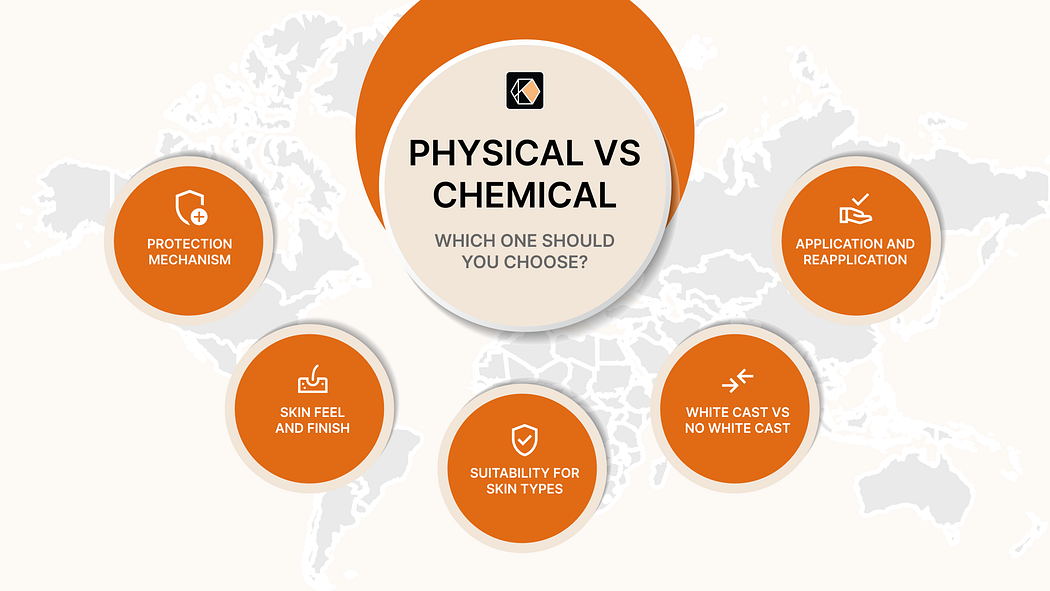
Protection Mechanism
Physical: Reflects and scatters UV rays away from the surface.
Chemical: Absorbs UV radiation and converts it into heat, neutralizing its impact.
Skin Feel and Finish
Physical: Feels slightly richer and forms a protective layer.
Chemical: Lightweight and blends easily, leaving little to no visible residue.
Suitability for Skin Types
Physical: Often preferred for sensitive or reactive conditions due to its gentle nature.
Chemical: Suitable for those who prefer a more comfortable, weightless feel.
White Cast vs No White Cast
Physical: May leave a slight white cast, especially on deeper tones, though newer formulas have improved.
Chemical: Typically provides a clear, invisible finish without any white residue.
Application and Reapplication
Physical: Works immediately upon application with no waiting time required.
Chemical: Needs a short absorption time around 15–20 minutes before sun exposure. Both require reapplication every few hours.
Which Sunscreen Is Better for Your Skin Type?
Sensitive Skin
For skin that reacts easily to products or environmental changes, choosing the right sunscreen is essential. Physical sunscreens are often preferred because they sit on the surface and reflect UV rays rather than interacting deeply. This reduces the chances of irritation, redness, or discomfort. Their simple, stable formulation makes them a dependable option for those who prioritize gentle, low-reactive skincare.
Oily & Acne-Prone Skin
When excess oil and breakouts are a concern, texture and finish play a major role. Lightweight chemical sunscreens tend to absorb quickly, avoiding the heavy or greasy feel that can sometimes worsen congestion. Modern formulations are designed to be non comedogenic, helping prevent clogged pores while still offering effective protection. A breathable, fast absorbing sunscreen can seamlessly fit into routines focused on oil control and clarity.
Dry Skin
Dry types benefit from formulations that do more than just protect, they should also support hydration. Both formulations can be suitable, particularly when they contain components that help retain moisture and strengthen the barrier. Cream based mineral sunscreens, in particular, often feel more nourishing and comforting, leaving the skin soft and supple after application. The goal is to protect while preventing further dryness or tightness throughout the day.
Normal Skin
With balanced conditions, there’s greater flexibility in choosing a sunscreen. Since there are no strong concerns like excessive oiliness or dryness, the decision can be based on personal preference, whether you prefer a matte or dewy finish, a lightweight feel, or a more protective layer. Seasonal changes, daily activities, and lifestyle can also influence what works best, making it easier to explore and switch between different formulations comfortably
How to Choose the Right Sunscreen Before Buying
Check SPF & PA rating
SPF indicates protection against UVB rays, while PA reflects UVA defense. A balanced rating ensures broader coverage for everyday use.
Look for broad-spectrum protection
A broad-spectrum sunscreen helps guard against multiple UV rays, ensuring more complete and dependable protection with every application.
Understand your skin needs
Think about how your skin behaves throughout the day. Does it feel oily, tight, or sensitive? Matching your sunscreen to these patterns improves comfort and consistency.
Consider daily usage and lifestyle
Your routine matters. If you spend long hours outdoors, reapplication ease becomes crucial. For indoor settings, a lightweight formula may feel more practical.
Common Myths About Sunscreens
Sunscreen is often surrounded by simplified assumptions that don’t always reflect how these formulations actually work. Clearing up these misconceptions allows for a more informed and confident approach to daily sun protection.
Chemical sunscreen is harmful
This is a common misconception. Approved chemical filters are tested for safety and are widely used across skincare products. When used correctly, they provide effective protection without causing harm.
Physical sunscreen is always better
No single type is universally superior. Each works differently, and the “better” option depends on your skin preferences, lifestyle, and comfort level.
Sunscreen is not needed indoors
UV rays can penetrate windows, meaning exposure isn’t limited to outdoor environments. Daily application remains important, even if you spend most of your time inside.
Can You Use Physical and Chemical Sunscreen Together?
Yes, combining both types is possible and sometimes beneficial. Layering can enhance overall coverage, especially when using hybrid formulations that blend mineral and chemical filters.
However, it’s important to apply products correctly, starting with lighter textures and finishing with heavier ones, to ensure proper absorption and effectiveness.
Conclusion
Choosing between physical and chemical sunscreen doesn’t have to be complicated. Both offer effective protection. The difference lies in how they feel, how they work, and how well they fit into your routine.
Instead of chasing the “perfect” formula, focus on consistency. Because the sunscreen that works best isn’t the one with the most claims, it’s the one you’ll actually use every day without hesitation.
FAQs
01. What is the difference between physical and chemical sunscreen?
Physical sunscreen forms a protective layer on the skin that reflects UV rays immediately after application. Chemical sunscreen, on the other hand, absorbs UV radiation and converts it into heat, which is then released. The difference also extends to texture, finish, and how seamlessly each formula fits into your daily routine
02. Which sunscreen is better for sensitive skin — physical or chemical?
Physical sunscreen is generally more suitable for sensitive skin because it sits on the surface and minimizes deeper interaction. This reduces the chances of irritation or redness. Its simpler, more stable formulation makes it a reliable option for those who prefer gentle skincare that prioritizes comfort without compromising on daily sun protection.
03. Is chemical sunscreen safe for daily use?
Yes, chemical sunscreens are safe for daily use when formulated with approved UV filters. These ingredients undergo strict testing to ensure effectiveness and skin compatibility. When applied correctly and consistently, they provide reliable protection while maintaining a lightweight, comfortable feel, making them ideal for everyday wear across different climates and routine
04. Which sunscreen is best for oily and acne-prone skin?
For oily and acne-prone skin, lightweight and non-comedogenic sunscreens work best. Chemical formulas are often preferred because they absorb quickly and don’t leave a heavy layer on the skin. This helps reduce the risk of clogged pores while still delivering effective sun protection, making them easier to incorporate into daily skincare routines.
05. Does physical sunscreen leave a white cast on the skin?
Physical sunscreens can sometimes leave a white cast due to their UV-reflecting minerals, especially on deeper skin tones. However, newer formulations are designed with finer particles and improved blending technology to reduce this effect. Many modern mineral sunscreens now offer a more natural finish without compromising on protection or overall performance.
06. How do I choose the right sunscreen for my skin type?
Choosing the right sunscreen starts with understanding your skin’s behavior — whether it’s oily, dry, sensitive, or balanced. From there, consider texture, finish, and how it fits into your routine. A sunscreen that feels comfortable and easy to use daily is more likely to be applied consistently, which is key to effective protection.
 Deutsch
 English
 Arabic
 French
 Spanish
 Portuguese
 Turkish
 Dutch
Dutch
 Italiano
 Russian
 Romaian
 Portuguese (Brazil)
 Greek
Greek
