


 Ban & Monetization Policy
 MyLiveRoom Rewards Program Rules & Eligibility
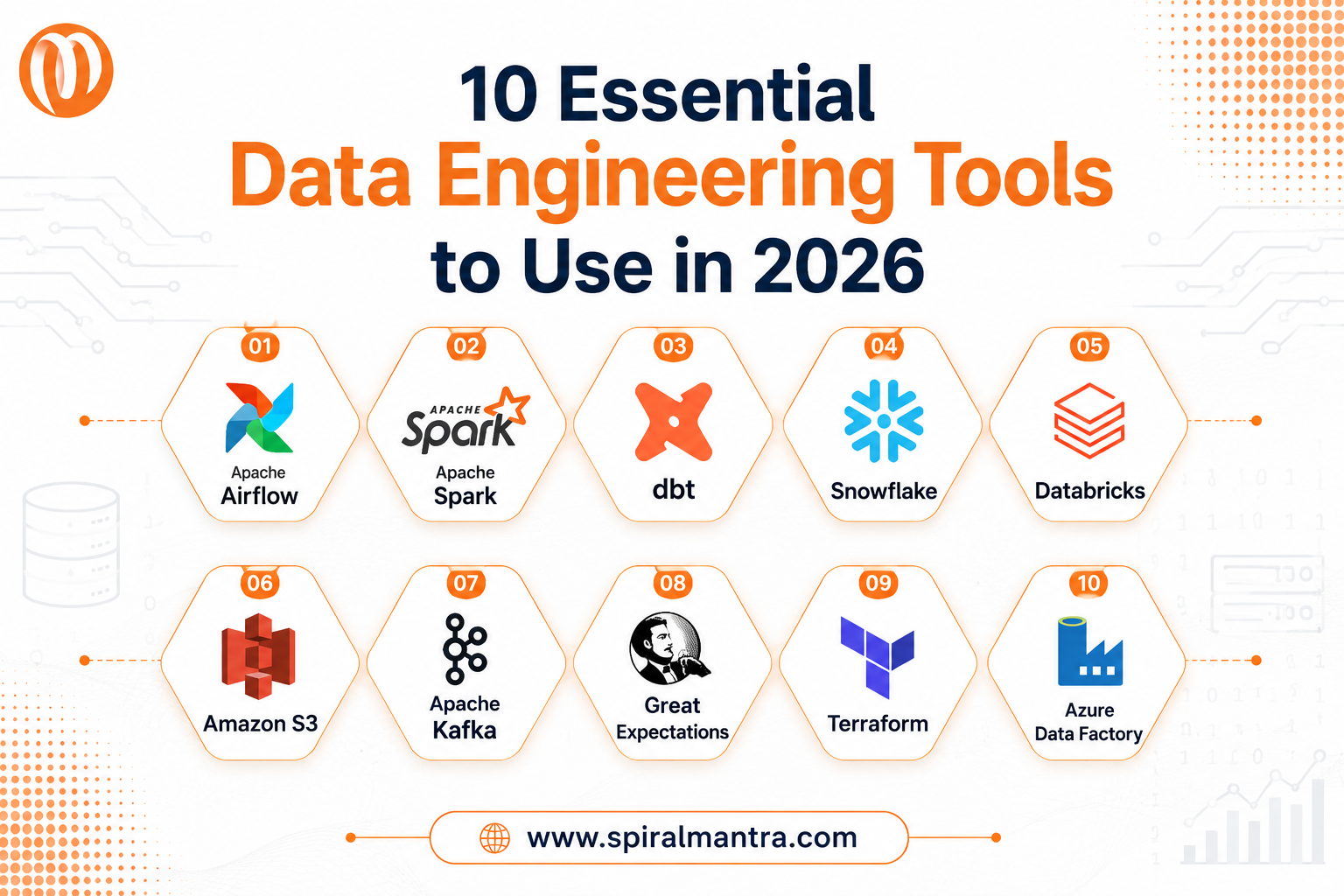
Data is no longer just a business asset—it is the foundation of digital transformation, AI innovation, and enterprise growth. Organizations across industries are investing heavily in modern data ecosystems to process, store, analyze, and activate data at scale. As businesses move toward AI-driven operations, the demand for scalable data engineering services and intelligent data analytics solutions continues to rise.
In 2026, companies are focusing on building real-time, cloud-native, and AI-ready data architectures. To achieve this, data engineers need modern tools that simplify ingestion, transformation, orchestration, analytics, and machine learning workflows.
Whether you are a startup building a cloud data pipeline or an enterprise modernizing legacy systems, choosing the right data engineering tools can significantly improve operational efficiency and business intelligence capabilities.
In this blog, we explore 10 essential data engineering tools to use in 2026 that are shaping the future of modern data infrastructure.
Why Modern Data Engineering Matters in 2026
Modern enterprises generate enormous volumes of structured and unstructured data from websites, mobile apps, IoT devices, cloud platforms, CRMs, and AI applications. Traditional systems struggle to manage this scale and complexity.
This is where advanced data engineering services become critical. Businesses need robust pipelines, real-time processing, scalable storage, and automated workflows to transform raw data into actionable insights.
Modern data engineering enables organizations to:
- Build scalable data pipelines
- Improve decision-making with real-time analytics
- Support AI and machine learning initiatives
- Ensure data quality and governance
- Reduce operational costs through automation
- Deliver advanced data analytics solutions
The tools below are helping organizations build future-ready data ecosystems.
1. Databricks
Overview
Databricks continues to dominate the modern data engineering landscape in 2026. Built on Apache Spark, Databricks provides a unified platform for data engineering, analytics, AI, and machine learning.
Organizations use Databricks to simplify large-scale data processing and enable collaborative analytics across engineering and business teams.
Key Features
- Unified analytics platform
- Lakehouse architecture
- AI and ML integration
- Real-time streaming analytics
- Delta Lake support
- Scalable cloud-native infrastructure
Why It Matters in 2026
As enterprises invest in generative AI and intelligent automation, Databricks is becoming central to enterprise AI ecosystems. Its ability to combine data engineering services with machine learning workflows makes it one of the most valuable tools for modern organizations.
Best For
- Enterprise data platforms
- AI-driven analytics
- Large-scale cloud data processing
- Real-time data analytics solutions
2. Apache Spark
Overview
Apache Spark remains one of the most powerful distributed data processing engines available today. It enables organizations to process massive datasets quickly using in-memory computing.
Spark supports batch processing, streaming, machine learning, and graph analytics, making it a versatile solution for modern data engineering teams.
Key Features
- High-speed distributed processing
- Real-time stream processing
- Machine learning libraries
- Multi-language support
- Scalable cluster computing
Why It Matters in 2026
With growing demand for real-time insights and AI-driven analytics, Apache Spark continues to power enterprise-grade data engineering services worldwide.
Best For
- Big data processing
- Real-time analytics
- Enterprise ETL pipelines
- Advanced data analytics solutions
3. Snowflake
Overview
Snowflake has transformed cloud data warehousing by offering highly scalable, secure, and performance-driven data storage solutions.
Its cloud-native architecture separates compute and storage, allowing businesses to scale workloads independently and optimize costs.
Key Features
- Cloud-native architecture
- Multi-cloud compatibility
- High-performance SQL analytics
- Secure data sharing
- Elastic scalability
Why It Matters in 2026
Organizations are increasingly adopting Snowflake to centralize enterprise data and power modern data analytics solutions.
Best For
- Cloud data warehousing
- Business intelligence
- Enterprise reporting
- Scalable analytics infrastructure
4. dbt (Data Build Tool)
Overview
dbt has become an essential tool for modern analytics engineering. It enables data teams to transform raw data directly inside cloud warehouses using SQL-based workflows.
Key Features
- SQL-based transformations
- Version-controlled analytics workflows
- Automated testing
- Data documentation
- Modular pipeline development
Why It Matters in 2026
As organizations adopt ELT architectures, dbt helps businesses improve data reliability and analytics scalability.
Best For
- Analytics engineering
- Data transformation
- Data quality management
- Modern data analytics solutions
5. Apache Kafka
Overview
Apache Kafka is the backbone of real-time data streaming architectures. It enables businesses to process millions of events per second with high reliability.
Kafka is widely used for real-time analytics, event-driven systems, and streaming data pipelines.
Key Features
- Real-time event streaming
- Distributed architecture
- Fault-tolerant messaging
- High scalability
- Stream processing capabilities
Why It Matters in 2026
As enterprises move toward real-time customer experiences and AI automation, Kafka remains critical for scalable data engineering services.
Best For
- Event-driven architecture
- Real-time data pipelines
- IoT analytics
- Streaming data analytics solutions
6. Apache Airflow
Overview
Apache Airflow is one of the most popular workflow orchestration tools for data engineering teams.
It allows engineers to schedule, automate, and monitor complex data workflows using Python.
Key Features
- Workflow orchestration
- Pipeline scheduling
- Task dependency management
- Open-source flexibility
- Extensive integrations
Why It Matters in 2026
Businesses managing large-scale cloud ecosystems need automated orchestration for efficient data operations.
Best For
- Workflow automation
- ETL orchestration
- Cloud pipeline management
- Enterprise data engineering services
7. Google BigQuery
Overview
Google BigQuery is a fully managed cloud data warehouse that enables ultra-fast SQL analytics at scale.
It allows organizations to analyze petabytes of data without managing infrastructure.
Key Features
- Serverless architecture
- High-speed analytics
- Built-in AI capabilities
- Real-time analytics
- Multi-cloud integrations
Why It Matters in 2026
BigQuery is becoming a preferred platform for organizations seeking scalable and cost-effective data analytics solutions.
Best For
- Cloud analytics
- Business intelligence
- AI-powered reporting
- Enterprise analytics platforms
8. Microsoft Azure Data Factory
Overview
Azure Data Factory is a cloud-based data integration service that helps businesses create scalable ETL and ELT pipelines.
It integrates seamlessly with the Microsoft ecosystem and supports hybrid cloud environments.
Key Features
- Data integration
- Hybrid cloud support
- Workflow orchestration
- Visual pipeline creation
- Enterprise-grade security
Why It Matters in 2026
Enterprises using Microsoft cloud ecosystems rely heavily on Azure Data Factory for efficient data engineering services.
Best For
- Enterprise ETL
- Cloud migration
- Hybrid data environments
- Large-scale integration workflows
9. Tableau
Overview
Tableau remains one of the leading business intelligence and visualization tools in 2026.
It helps organizations transform complex datasets into interactive dashboards and actionable business insights.
Key Features
- Interactive dashboards
- Real-time analytics
- Drag-and-drop visualization
- AI-powered insights
- Multi-source connectivity
Why It Matters in 2026
Modern businesses require advanced data analytics solutions that make data understandable for both technical and non-technical users.
Best For
- Business intelligence
- Executive dashboards
- Data visualization
- Enterprise reporting
10. Power BI
Overview
Microsoft Power BI continues to grow as a preferred analytics platform for enterprises seeking cost-effective business intelligence solutions.
Its seamless integration with Microsoft tools makes it highly valuable for organizations using Azure and Office ecosystems.
Key Features
- Interactive reporting
- AI-powered analytics
- Cloud-based dashboards
- Real-time business monitoring
- Enterprise integrations
Why It Matters in 2026
Power BI empowers organizations to create accessible and scalable data analytics solutions with minimal technical complexity.
Best For
- Business intelligence
- Enterprise analytics
- Executive reporting
- Data visualization
Emerging Trends in Data Engineering for 2026
The future of data engineering is being shaped by AI, automation, cloud-native infrastructure, and real-time analytics.
Here are some major trends businesses should watch:
1. AI-Driven Data Pipelines
AI-powered automation is improving pipeline monitoring, anomaly detection, and predictive analytics.
2. Real-Time Analytics Adoption
Organizations are increasingly adopting streaming architectures for faster business decisions.
3. Data Lakehouse Architectures
Lakehouse platforms are combining the benefits of data lakes and warehouses into unified systems.
4. Cloud-Native Data Engineering
Cloud platforms are becoming the foundation of scalable enterprise data ecosystems.
5. Stronger Data Governance
As regulations increase, businesses are prioritizing data quality, lineage, and governance frameworks.
How Data Engineering Services Drive Business Growth
Modern data engineering services help organizations unlock the true value of enterprise data. Businesses can improve operational efficiency, customer experiences, forecasting accuracy, and AI readiness through scalable data infrastructure.
Professional data engineering services typically include:
- Data pipeline development
- Cloud data migration
- Real-time analytics implementation
- Data warehouse modernization
- Data integration and orchestration
- AI and machine learning enablement
- Data governance and security
Organizations investing in advanced data analytics solutions gain a competitive advantage through faster and smarter decision-making.
Choosing the Right Data Engineering Tool
Selecting the best tool depends on your business goals, cloud strategy, scalability requirements, and analytics maturity.
Consider the following factors:
- Scalability requirements
- Real-time processing needs
- Cloud compatibility
- Integration capabilities
- Security and governance
- Cost optimization
- AI and machine learning support
Many enterprises use a combination of tools to build modern, flexible, and scalable data ecosystems.
Final Thoughts
Data engineering is evolving rapidly as businesses accelerate digital transformation and AI adoption. The tools listed above are helping organizations build scalable, cloud-native, and intelligent data infrastructures in 2026.
From Databricks and Apache Spark to Snowflake, Kafka, Tableau, and Power BI, each platform plays a critical role in enabling advanced data engineering services and modern data analytics solutions.
Businesses that invest in the right technologies today will be better positioned to leverage AI, automation, and real-time analytics in the future.
As enterprise data volumes continue to grow, modern data engineering tools will remain the backbone of innovation, operational efficiency, and competitive advantage.

 English
 Arabic
 French
 Spanish
 Portuguese
 Deutsch
 Turkish
 Dutch
Dutch
 Italiano
 Russian
 Portuguese (Brazil)
 Greek
Greek
