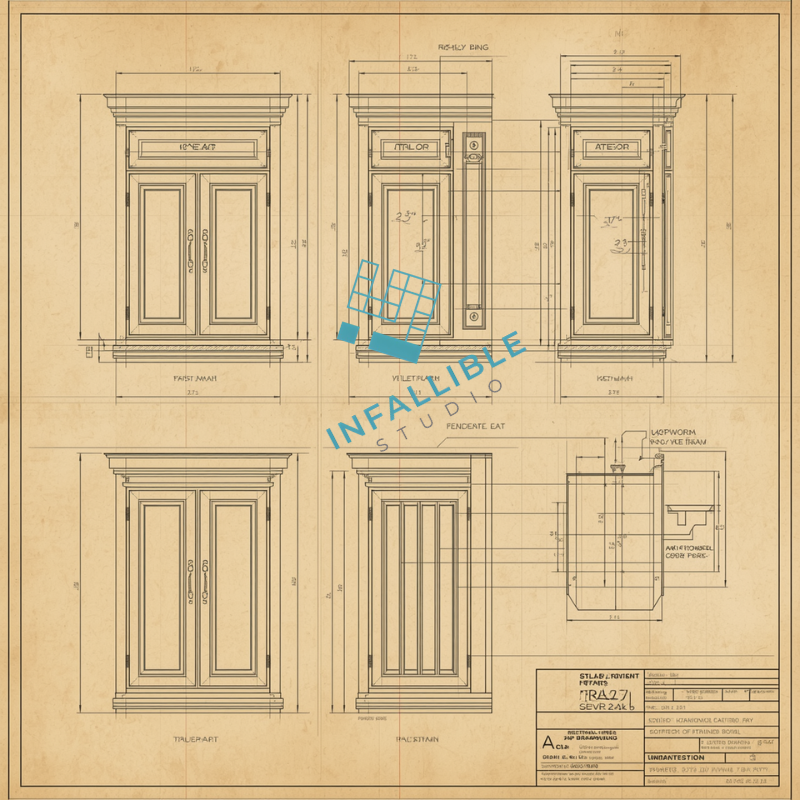
Millwork shop drawings are one of the most important components in architectural interiors, custom cabinetry, and commercial construction projects. These detailed technical drawings act as a bridge between design concepts and actual manufacturing. They provide fabricators, contractors, architects, and installers with precise information required to build custom woodwork accurately and efficiently.
From luxury residential interiors to large-scale commercial spaces, millwork shop drawings help eliminate confusion, reduce construction errors, improve coordination, and ensure the final product matches the designer’s vision. Without proper shop drawings, projects often face delays, costly revisions, material wastage, and installation issues.
This guide explains everything about millwork shop drawings, including their purpose, components, benefits, workflow, types, software used, and best practices.
What Are Millwork Shop Drawings?
Millwork shop drawings are highly detailed technical documents created for the fabrication and installation of custom woodwork elements. These drawings translate architectural and interior design concepts into production-ready instructions.
Unlike conceptual drawings, shop drawings focus on precise dimensions, materials, joinery details, finishes, hardware specifications, and manufacturing requirements.
They are typically prepared by:
Millwork shop drawings are used for custom-made wooden components such as:
- Kitchen cabinets
- Wardrobes
- Reception desks
- Display units
- Wall paneling
- TV units
- Vanities
- Office furniture
- Retail fixtures
- Wooden doors
- Shelving systems
Importance of Millwork Shop Drawings
1. Improves Accuracy
Shop drawings provide exact dimensions and specifications, ensuring all components are manufactured correctly before production begins.
2. Reduces Errors
Detailed drafting minimizes misunderstandings between architects, contractors, fabricators, and installers.
3. Saves Time and Cost
Accurate drawings reduce rework, material wastage, and on-site modifications, helping projects stay within budget.
4. Ensures Design Intent
Shop drawings ensure the final fabricated product aligns with the architect’s or interior designer’s original vision.
5. Better Coordination
Millwork elements often interact with MEP systems, structural elements, and finishes. Shop drawings help coordinate all trades efficiently.
6. Supports Approval Process
Architects and consultants review shop drawings before fabrication to verify compliance with project requirements.
Key Components of Millwork Shop Drawings
General Notes
These include project details, drawing standards, abbreviations, material references, and fabrication instructions.
Dimensions
Accurate measurements are the foundation of shop drawings. Every component includes:
- Height
- Width
- Depth
- Thickness
- Clearance requirements
Plan Views
Top-view layouts show positioning and spatial relationships of millwork elements.
Elevations
Front-facing views illustrate appearance, finishes, door styles, and alignment details.
Sections
Cross-sectional drawings reveal internal construction details and joinery methods.
Material Specifications
Drawings specify materials such as:
- Plywood
- MDF
- Veneer
- Solid wood
- Laminates
- Acrylic panels
Hardware Details
Includes information about:
- Hinges
- Handles
- Drawer slides
- Locks
- Pull-outs
- Fasteners
Joinery Details
Shows fabrication methods including:
- Dovetail joints
- Butt joints
- Mortise and tenon joints
- Groove connections
Finish Specifications
Finish details may include:
- Paint type
- Veneer finish
- Laminate code
- Polish finish
- Texture requirements
Installation Instructions
These drawings may include fixing methods, mounting details, and site coordination instructions.
Types of Millwork Shop Drawings
Cabinet Shop Drawings
Prepared for kitchens, wardrobes, storage systems, and custom cabinetry.
Includes:
- Cabinet layouts
- Internal shelf details
- Door swing directions
- Hardware placements
Furniture Shop Drawings
Used for custom furniture fabrication such as:
- Office desks
- Conference tables
- Reception counters
- TV consoles
Architectural Millwork Drawings
Prepared for decorative and structural woodwork elements including:
- Wall cladding
- Ceiling panels
- Feature walls
- Wooden partitions
Retail Fixture Drawings
Used in commercial and retail environments for:
- Display shelves
- Product showcases
- Cash counters
- Branding units
Commercial Interior Millwork Drawings
Created for offices, hotels, restaurants, and corporate interiors.
These drawings often involve extensive coordination with HVAC, electrical, and plumbing systems.
Millwork Shop Drawing Workflow
1. Design Review
The drafting team reviews architectural and interior design drawings.
2. Site Measurements
Field dimensions are verified to ensure fabrication accuracy.
3. Drafting Process
Detailed CAD or BIM drawings are prepared based on project specifications.
4. Coordination
Drawings are coordinated with:
- Structural drawings
- MEP drawings
- Ceiling layouts
- Flooring plans
5. Client and Consultant Approval
Shop drawings are submitted for review and approval before production.
6. Fabrication
Approved drawings are sent to the manufacturing team.
7. Installation
Installers use the approved shop drawings for on-site execution.
AutoCAD
Widely used for 2D drafting and detailed fabrication drawings.
Revit
Used for BIM-based millwork modeling and coordination.
SketchUp
Helpful for 3D visualization and conceptual detailing.
SolidWorks
Used for advanced product manufacturing and precise fabrication.
Cabinet Vision
Specialized software for cabinetry and woodworking industries.
Microvellum
Advanced millwork drafting and CNC integration software.
Difference Between Design Drawings and Shop Drawings
| Feature |
Design Drawings |
Shop Drawings |
| Purpose |
Conceptual design |
Fabrication instructions |
| Prepared By |
Architects/Designers |
Fabricators/Drafters |
| Detail Level |
Basic |
Highly detailed |
| Focus |
Aesthetics and layout |
Manufacturing accuracy |
| Usage |
Client approval |
Production and installation |
Benefits of Professional Millwork Drafting Services
Improved Project Coordination
Professional drafters ensure smooth communication among all stakeholders.
Faster Approvals
Clear and organized drawings reduce consultant review time.
CNC Compatibility
Modern shop drawings can integrate directly with CNC machines for automated production.
Enhanced Visualization
3D shop drawings help clients understand the final outcome better.
Reduced Construction Delays
Accurate fabrication minimizes installation issues and site conflicts.
Common Challenges in Millwork Shop Drawings
Incomplete Design Information
Missing architectural details can delay drafting work.
Site Dimension Variations
Incorrect measurements can lead to fabrication errors.
Coordination Conflicts
Millwork may clash with electrical, plumbing, or HVAC systems.
Frequent Revisions
Late-stage design changes can affect production timelines.
Material Availability
Specified materials may not always be available during fabrication.
Best Practices for Millwork Shop Drawings
Verify Site Measurements
Always confirm dimensions before fabrication begins.
Follow Industry Standards
Use consistent drafting standards and layer management.
Maintain Clear Communication
Coordinate regularly with architects, contractors, and fabricators.
Use Detailed Labeling
Every component should be clearly tagged and identified.
Include Revision Tracking
Revision history helps teams monitor drawing updates efficiently.
Ensure Quality Checks
Review drawings carefully before approval and production.
Role of BIM in Modern Millwork Drafting
Building Information Modeling (BIM) has transformed millwork drafting by improving collaboration and visualization.
Benefits of BIM-based millwork drawings include:
- Clash detection
- Real-time coordination
- Improved visualization
- Better quantity estimation
- Faster revisions
- Enhanced project accuracy
BIM tools like Revit allow millwork components to integrate seamlessly with entire building models.
Industries That Use Millwork Shop Drawings
Millwork drafting services are widely used in:
- Residential construction
- Commercial interiors
- Hospitality projects
- Retail stores
- Healthcare facilities
- Educational institutions
- Corporate offices
- Luxury interiors
Future of Millwork Shop Drawings
The future of millwork drafting is becoming increasingly technology-driven. Advanced automation, CNC integration, cloud collaboration, and 3D modeling are improving efficiency and accuracy.
Emerging trends include:
- Parametric modeling
- AI-assisted drafting
- Cloud-based collaboration
- Digital fabrication
- Smart manufacturing integration
- Virtual reality visualization
These technologies are helping the construction and woodworking industries achieve faster project delivery and better quality control.
Conclusion
Millwork shop drawings play a critical role in transforming architectural and interior concepts into precise, buildable solutions. They provide the technical foundation required for accurate fabrication, seamless coordination, and successful installation.
Whether for residential cabinetry, commercial interiors, retail fixtures, or luxury custom furniture, detailed millwork shop drawings improve project efficiency, reduce costly mistakes, and ensure high-quality results.
As construction and interior industries continue adopting BIM, automation, and digital fabrication technologies, millwork shop drawings will remain an essential part of modern project execution.



 Ban & Monetization Policy
 MyLiveRoom Rewards Program Rules & Eligibility

 English
 French
 Spanish
 Portuguese
 Deutsch
 Turkish
 Dutch
Dutch
 Italiano
 Russian
 Romaian
 Portuguese (Brazil)
 Greek
Greek
