A long trail through rivers, mountains, and high passes makes the annapurna circuit trek one of the most famous journeys in Nepal. With support from Adventure White Himalaya, this adventure becomes easier to understand, plan, and complete with proper guidance from start to finish. One of the most common questions from trekkers is simple: how long does this trek actually take?
A Journey That Feels Long but Beautiful
The Annapurna Circuit is not a short walk. It is a full mountain journey that crosses many villages, valleys, and high passes. The trail slowly climbs from warm green hills to cold snowy mountains. Every day feels different.
Some days are easy with gentle paths along rivers. Other days are hard with long uphill climbs. Because of this mix, the trek feels like a real adventure, not just a hike.
Most trekkers do not rush this route. The beauty is in the slow travel, where every step brings new views, new people, and new experiences.
Trek Facts You Should Know
The Annapurna Circuit Trek usually takes 12 to 18 days to complete, depending on the walking speed and chosen route. The total trekking distance is around 160 to 230 kilometers. The highest point of the journey is Thorong La Pass at 5,416 meters above sea level.
This wide range in distance and time happens because some trekkers start earlier or finish faster, while others take extra rest days for better acclimatization.
From Start: The First Days of the Trek
The journey usually begins from Besisahar or nearby areas after a drive from Kathmandu or Pokhara. The first few days are lower in altitude and easier to walk.
These early days pass through rice fields, small villages, waterfalls, and forest trails. The weather is warm, and the air is thick with oxygen. Walking feels comfortable, and the body slowly adjusts to the trekking rhythm.
Adventure White Himalaya often helps trekkers organize transport, permits, and local arrangements at this stage. This support makes the beginning of the journey smooth and stress-free.
Middle Section: Where the Trek Becomes Real
After a few days, the trail enters higher regions like Chame, Pisang, and Manang. Here, the mountains start to appear closer and more powerful.
The air becomes thinner, and walking becomes slower. Rest days are important in Manang to help the body adjust to altitude. This is called acclimatization.
Adventure White Himalaya guides often recommend proper pacing and rest schedules during this stage. Eating well, drinking water, and walking slowly help avoid altitude sickness.
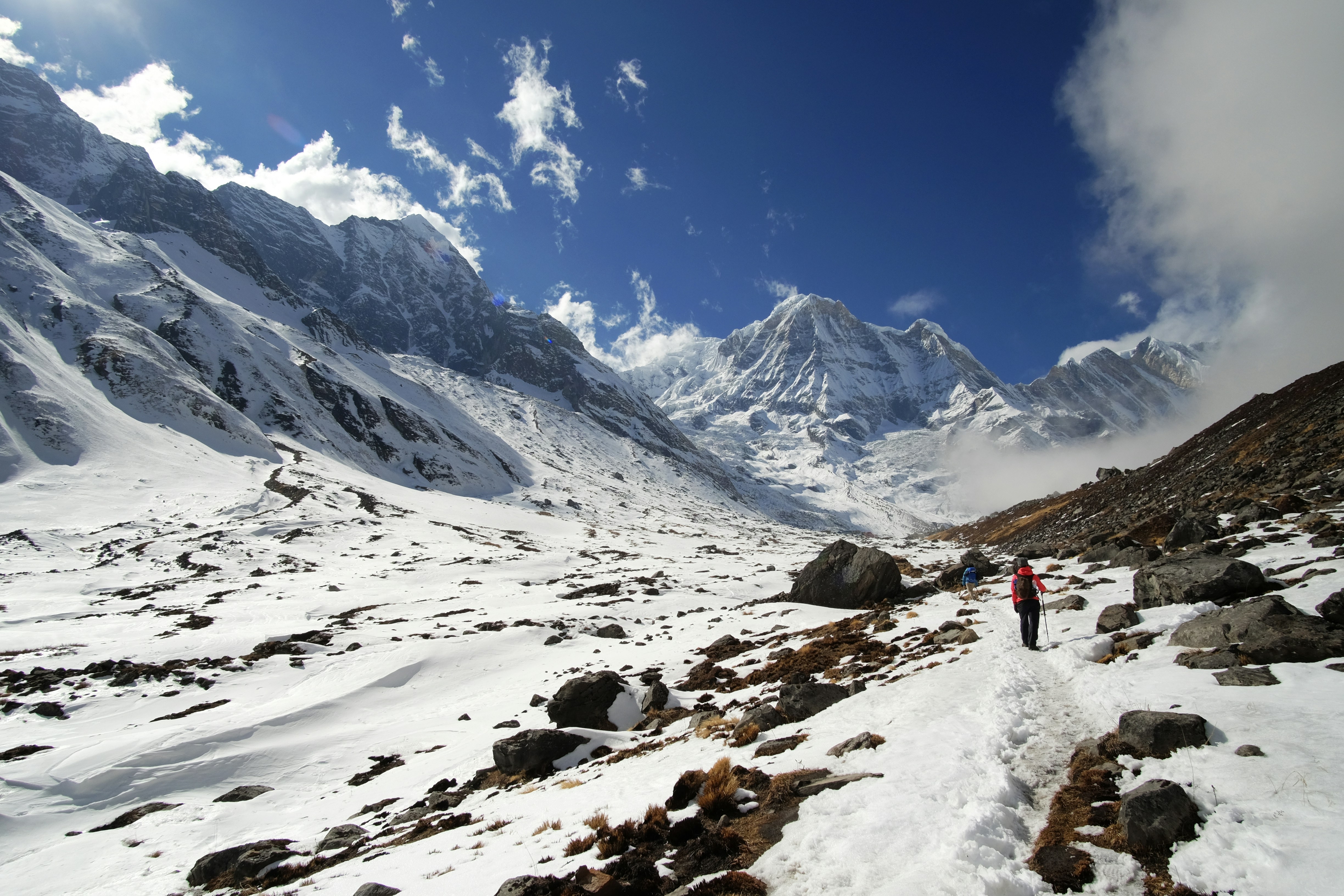
This middle section is where trekkers truly feel the Himalayan environment. Cold winds, rocky paths, and wide mountain views become part of daily life.
High Point: Thorong La Pass Challenge
One of the most important parts of the Annapurna Circuit Trek is crossing Thorong La Pass at 5,416 meters. This is the highest point of the journey and also the hardest day.
The climb usually starts early in the morning. The air is very thin, and walking becomes slow. Snow and wind can make the path more difficult.
Reaching the top feels like a big achievement. After the pass, the trail goes down toward Muktinath and lower Mustang regions, where the air becomes warmer again.
This section shows why the trek takes so many days. The body needs time to climb up and then safely come down.
Why the Trek Takes So Long
The Annapurna Circuit Trek is not just about distance. It is about safety and adjustment.
The main reason for its length is altitude. The body needs time to adapt to changing oxygen levels. Rushing can cause sickness.
Weather also plays a role. Mountain conditions change quickly. Extra days are often added for safety.
Another reason is experience. Many trekkers want to enjoy villages, culture, and views instead of rushing through.
Role of Adventure White Himalaya in the Journey
Adventure White Himalaya plays an important role in making this long trek safe and organized. Their experienced guides understand the route, altitude challenges, and local conditions very well.
They provide full support, including trekking permits, transportation, accommodation, meals, and route planning. This helps trekkers focus only on the journey without stress about logistics.
During the trek, guides help manage walking speed, rest days, and health checks. If any problem appears, quick support is provided to ensure safety.
This kind of professional service is very helpful on a long route like the Annapurna Circuit.
Life on the Trail: Villages and Culture
One of the most special parts of this trek is the culture. The route passes through Gurung, Thakali, and Tibetan-influenced villages.
Each village has its own traditions, food, and lifestyle. Teahouses along the way provide warm meals and simple rooms for rest.
Trekkers often enjoy local food like dal bhat, noodles, and soups. These meals give energy for the next day’s walk.
This cultural experience adds more meaning to the long journey.
The Downhill Journey After the Pass
After crossing Thorong La Pass, the trek changes direction. The trail goes down into the Mustang region.
The air becomes warmer, and walking feels easier on the lungs. The landscape also changes from green hills to dry mountain valleys.
This section is less difficult but still long. Legs feel tired after the big climb, so steady walking is important.
Final Thoughts on Trek Duration
The Annapurna Circuit Trek is not a quick trip. It is a full mountain experience that takes time, patience, and effort.
On average, 12 to 18 days are needed to complete it safely. This time allows trekkers to enjoy nature, adjust to altitude, and explore local culture.
A Journey Worth Every Day
From start to finish, the Annapurna Circuit Trek is more than just a walking route. It is a journey through changing landscapes, high passes, and peaceful villages.
With support from Adventure White Himalaya, the entire experience becomes well-planned, safe, and meaningful. Their guidance helps make each day on the trail smoother and more enjoyable.
In the end, the time spent on the Annapurna Circuit is not just about how long it lasts, but about the memories created along every step of the Himalayan journey.



 Ban & Monetization Policy
 MyLiveRoom Rewards Program Rules & Eligibility
 Deutsch

 English
 Arabic
 French
 Spanish
 Portuguese
 Turkish
 Dutch
Dutch
 Italiano
 Russian
 Romaian
 Portuguese (Brazil)
 Greek
Greek