


 Ban & Monetization Policy
 MyLiveRoom Rewards Program Rules & Eligibility
How Blockchain Development is Powering the Future of Decentralized Finance (DeFi) and Web3 Ecosystems
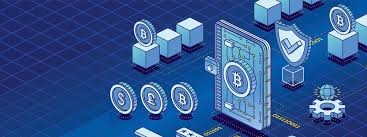
The financial industry is undergoing one of the biggest transformations in history due to blockchain technology. Traditional financial systems rely heavily on centralized institutions such as banks, payment processors, and clearinghouses. These systems often involve delays, high costs, and limited accessibility. Blockchain development is changing this structure by enabling decentralized financial ecosystems where users can interact directly without intermediaries.
Decentralized finance, commonly known as DeFi, is built on blockchain networks and allows users to access financial services such as lending, borrowing, trading, and earning interest without traditional banks. These systems are powered by smart contracts, which are self-executing programs that automatically perform financial actions when specific conditions are met. This removes the need for manual approval and increases efficiency and transparency.
Blockchain development plays a central role in the functioning of DeFi systems. Every transaction is recorded on a distributed ledger, ensuring that all data is transparent and cannot be altered. This makes financial systems more secure and reduces the risk of fraud. Since blockchain networks operate through consensus mechanisms, all participants validate transactions, creating a trustless system where no central authority is required.
Decentralized exchanges are one of the most widely used applications of DeFi. These platforms allow users to trade cryptocurrencies directly without relying on centralized exchanges. Another important component is decentralized lending, where users can lend or borrow digital assets without banks. Interest rates are determined algorithmically, making the system more dynamic and accessible to users worldwide.
Yield farming and staking have also become popular within DeFi ecosystems. These systems allow users to earn rewards by contributing liquidity to decentralized platforms. Stablecoins are another important innovation that helps reduce volatility by pegging digital assets to real-world currencies.
Web3 expands these decentralized principles beyond finance into the entire internet ecosystem. In Web3, users have complete ownership of their digital identity, data, and assets. Unlike traditional Web2 platforms, where data is controlled by centralized companies, Web3 applications run on blockchain networks and give users full control over their digital presence.
The combination of DeFi and Web3 is creating a new digital economy where financial systems, identity management, and digital ownership are fully decentralized. Blockchain development is the foundation of this ecosystem, enabling secure transactions, smart contract automation, and decentralized governance.
Despite its advantages, DeFi also faces challenges such as security vulnerabilities, regulatory uncertainty, and market volatility. Smart contract errors can lead to financial losses, and hacking incidents have raised concerns about platform safety. However, continuous improvements in blockchain security, auditing tools, and decentralized governance systems are helping reduce these risks.
Internal linking is important for SEO optimization in blockchain-related websites. This blog can be connected to pages such as DeFi development services, smart contract security auditing, cryptocurrency exchange development, NFT marketplace solutions, Web3 blockchain applications, and decentralized application development. These internal links help build topical authority and improve search engine visibility.
Keyword optimization also plays a major role in ranking. Important keywords such as decentralized finance development, blockchain development services, DeFi platforms, Web3 ecosystems, smart contract development, and blockchain applications should be naturally included in the content. Proper keyword placement helps improve organic search performance without affecting readability.
The future of decentralized finance is expected to include wider institutional adoption, cross-chain interoperability, and integration with artificial intelligence. These advancements will make financial systems more intelligent, automated, and scalable. As blockchain technology continues to evolve, DeFi and Web3 will become more mainstream, replacing many traditional financial structures.
In conclusion, blockchain development is the driving force behind decentralized finance and Web3 ecosystems. It is reshaping global financial systems by removing intermediaries, increasing transparency, and enabling secure peer-to-peer transactions. Businesses adopting these technologies today are preparing themselves for the future of digital finance and decentralized innovation.
 Italiano
 English
 Arabic
 French
 Spanish
 Portuguese
 Deutsch
 Turkish
 Dutch
Dutch
 Russian
 Romaian
 Portuguese (Brazil)
 Greek
Greek
