


 Ban & Monetization Policy
 MyLiveRoom Rewards Program Rules & Eligibility
How Jaw Health Affects Daily Life A Guide to TMJ Dysfunction Treatment
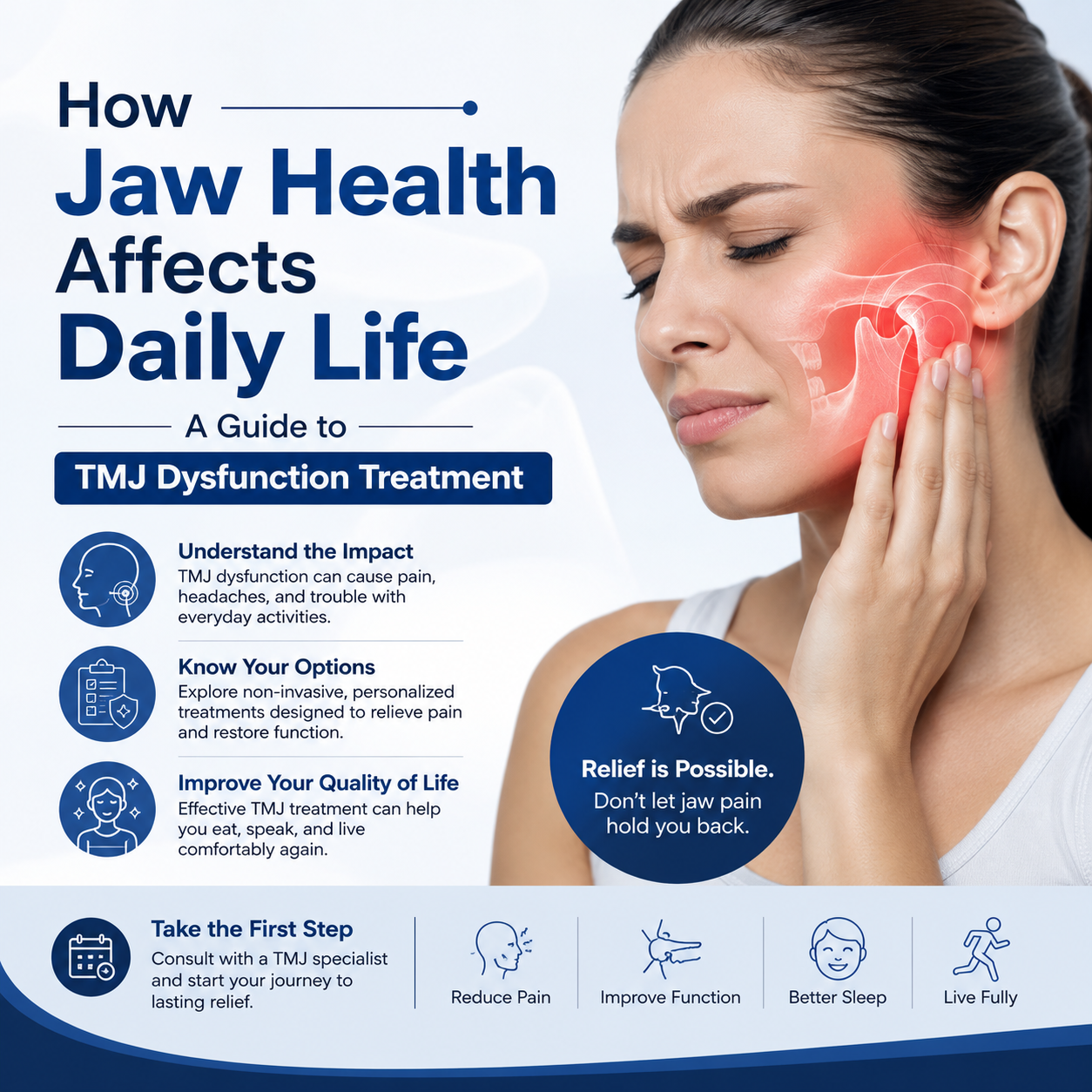
Most people rarely think about their jaw until discomfort begins to interfere with everyday life. The jaw is something we use constantly without realizing it. From speaking and eating to laughing and yawning, nearly every day includes hundreds of jaw movements. Because it works so frequently, even a small problem can have a larger impact than expected.
Jaw discomfort is not always limited to the mouth area. Problems with jaw function can affect sleep, concentration, eating habits, and overall comfort. In many cases, symptoms can gradually become part of a person’s routine, making them easy to ignore. Understanding how jaw health influences daily life can help people recognize warning signs early and seek appropriate support before symptoms become more challenging.
Understanding Jaw Function and TMJ Dysfunction
The temporomandibular joint, commonly known as TMJ, connects the lower jaw to the skull. It works like a sliding hinge, allowing smooth movement while opening and closing the mouth.
When this joint or the surrounding muscles are not working properly, TMJ dysfunction may occur. Several factors can contribute to these issues, including:
- Teeth grinding or clenching
- Stress and muscle tension
- Jaw injuries
- Poor posture
- Arthritis
- Bite alignment concerns
Some people experience mild discomfort, while others deal with symptoms that significantly affect their daily routine.
How Jaw Health Influences Everyday Activities
Jaw health affects more parts of daily life than many people realize. Since the jaw works with several surrounding muscles and structures, problems can create effects throughout the body.
Eating Becomes Less Comfortable
Eating should be an enjoyable experience, but jaw discomfort can make it challenging.
People with TMJ problems sometimes experience:
- Pain while chewing
- Jaw fatigue during meals
- Clicking or popping sounds
- Difficulty opening the mouth fully
Hard or chewy foods may become especially uncomfortable. Over time, some individuals begin avoiding certain foods simply because eating becomes frustrating.
Imagine sitting down to enjoy your favorite meal but feeling pain with every bite. This situation can gradually affect daily habits and overall enjoyment.
Speaking Can Feel More Difficult
The jaw is involved in nearly every conversation. Whether participating in meetings, talking with friends, or speaking on the phone, the muscles around the jaw stay active.
When jaw function is affected, people may notice:
- Discomfort after long conversations
- Tightness while speaking
- Fatigue around the face and jaw
Jobs that require frequent communication can become especially difficult when symptoms continue over time.
Sleep Quality May Be Affected
Many people clench their jaws or grind their teeth during sleep without realizing it.
Nighttime grinding places additional pressure on the jaw joint and surrounding muscles. As a result, some individuals wake up with:
- Headaches
- Jaw soreness
- Facial pain
- Neck tension
Poor sleep quality can also affect energy levels, concentration, and mood during the day.
Jaw Problems Can Contribute to Headaches
Headaches are one of the most common symptoms associated with TMJ dysfunction.
The muscles surrounding the jaw connect closely with muscles in the head and neck. When jaw muscles become tense or overworked, pain can spread into nearby areas.
People often describe TMJ-related headaches as:
- Pressure around the temples
- Tightness across the forehead
- Pain behind the eyes
- Tension that worsens throughout the day
Since these headaches can resemble migraines or tension headaches, the jaw may not always be considered as a possible cause.
Emotional and Lifestyle Effects
Living with constant discomfort affects more than physical health.
Pain can gradually influence mood, concentration, and daily enjoyment. Some people become hesitant to participate in social activities or avoid situations where they expect symptoms to worsen.
For example, someone experiencing facial pain during meals may avoid dining out with friends or family. Small changes like these can slowly affect overall well-being.
How Treatment Can Support Better Jaw Health
Treatment focuses on improving jaw movement, reducing tension, and addressing contributing factors.
Instead of only reducing symptoms temporarily, treatment often aims to improve function and support long-term comfort.
Reducing Muscle Tension
Muscle tightness frequently contributes to discomfort.
People seeking TMJ Dysfunction Treatment in Mission often benefit from approaches designed to reduce tension in the jaw and surrounding muscles.
Improving Jaw Mobility
Restricted movement can place additional pressure on nearby tissues.
Exercises and therapeutic techniques may help improve movement and support better function.
Addressing Daily Habits
Certain daily habits can unknowingly increase stress on the jaw, such as:
- Clenching the jaw during stressful situations
- Resting the chin on the hand
- Excessive gum chewing
- Poor sitting posture
Individuals receiving TMJ Dysfunction Treatment in Mission often learn practical ways to reduce these habits and protect jaw health.
Simple Ways to Support Jaw Health at Home
Professional treatment can work alongside healthy daily routines.
Helpful habits include:
Pay attention to posture
Keeping the head and neck aligned can reduce pressure on the jaw.
Choose softer foods when symptoms increase
Reducing stress on the jaw can help minimize irritation.
Apply gentle heat
Warm compresses may help relax tight muscles.
Manage stress effectively
Relaxation techniques and physical activity may reduce jaw clenching habits.
Many individuals using TMJ Dysfunction Treatment in Mission find that combining treatment with healthy habits supports better results.
Why Early Attention Matters
Minor symptoms may seem easy to ignore at first, but discomfort can gradually become more noticeable.
Jaw problems that are left unaddressed may continue affecting sleep, eating, concentration, and daily activities. Early intervention often helps people identify contributing factors before symptoms become more disruptive.
People exploring TMJ Dysfunction Treatment in Mission frequently seek help after trying temporary solutions that provide only short-term relief. Addressing the source of discomfort may create a more effective path toward long-term improvement.
Conclusion
Jaw health plays a larger role in daily life than many people realize. From eating and speaking to sleeping and concentrating, the jaw supports many activities that are easy to take for granted until discomfort appears.
Ignoring symptoms such as headaches, facial pain, jaw stiffness, or tension can allow problems to continue affecting daily routines. Understanding the impact of jaw function is an important step toward maintaining overall well-being.
If jaw discomfort is interfering with your quality of life, consider exploring TMJ Dysfunction Treatment in Mission to better understand your symptoms and move toward improved comfort, healthier movement, and a more active daily routine
 Russian
 English
 Arabic
 French
 Spanish
 Portuguese
 Deutsch
 Turkish
 Dutch
Dutch
 Italiano
 Romaian
 Portuguese (Brazil)
 Greek
Greek
